Page 8 - Skill Builder Videos

  1. Video: Intro to Tongue and Groove Cabinet Doors

    Video: Intro to Tongue and Groove Cabinet Doors

    You can save a lot of money by making your own frame and panel cabinet doors. We show you how these cabinet doors are constructed using tongue and groove joinery. You'll also learn about the many design options that you can feature on your frame and panel doors, including multiple panels and glass.
    Read more
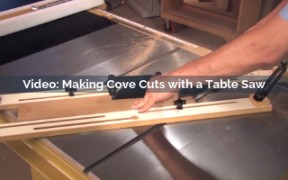
  2. Video: Making Cove Cuts with a Table Saw

    Video: Making Cove Cuts with a Table Saw

    How to use a cove cutting jig to make cove cuts with your table saw.
    Read more
  3. Video: Matching Wood Putty

    Video: Matching Wood Putty

    Learn how to choose and match the exact right color putty for your woodworking projects. Choose your putty to match the lightest background color in the wood grain.
    Read more
  4. Video: Prepping Wood For Water Based Finishes

    Video: Prepping Wood For Water Based Finishes

    Water-based finishes can raise the grain fibers, leaving a rough surface. Before applying water-based finishes, it's a good idea to wet the surface with water to intentionally raise the grain. Then sand the surface with 400 grit sandpaper to smooth the surface. Now you can apply the finish and it will not raise the grain.
    Read more
  5. Video: How To Clean Paint Brushes

    Video: How To Clean Paint Brushes

    Here's how to clean paint brushes to keep them in the best condition. You'll get the best painting and finishing results by using a good quality brush. Keep your paint, stain, and top coat brushes like new by cleaning them correctly.
    Read more
  6. Video: Finishing Walnut with Dye Stain

    Video: Finishing Walnut with Dye Stain

    One of the best ways to warm up the color of walnut wood that looks a little too grey is to apply orange dye stain. Learn how to mix dye stain, make test samples, and then apply the stain to your project.
    Read more
  7. Video: Cutting Notches for Lap Joints with a Circular Saw

    Video: Cutting Notches for Lap Joints with a Circular Saw

    The fastest way to crosscut a notch or dado for a lap joint is to use a dado set and table saw, but you can make the same cut using a circular saw and chisel.
    Read more
  8. Video: Cutting Mortises with a Mortising Machine

    Video: Cutting Mortises with a Mortising Machine

    A mortising machine makes cutting mortises fast and easy. Learn how to set up and cut mortises with a hollow chisel mortising machine. These tips will help you get great results with your mortise machine.
    Read more
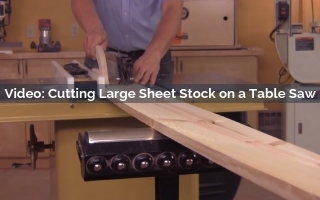
  9. Video: Cutting Large Sheet Stock on a Table Saw

    Video: Cutting Large Sheet Stock on a Table Saw

    How to safely cut full pieces of sheet stock on a table saw. Cutting full sheets of plywood, MDF, OSB, melamine, or particle board can be tricky and even dangerous. If you plan to cut a full sheet of plywood on the table saw, it's best to get a second person to help support the plywood. If you are working alone, it is best to use a circular saw to cut the plywood into smaller pieces.
    Read more
  10. Video: Building Furniture with Beadlock Floating Tenons

    Video: Building Furniture with Beadlock Floating Tenons

    The BeadLock joinery system makes it easy to create rock-solid mortise and tenon joints. All you need to make them is your hand drill and this Beadlock® Kit. Ribbed tenon design prevents racking and increases the amount of precious face-grain glue surface. The result is an extremely strong, totally concealed joint. Included shim set allows you to mortise a variety of stock thicknesses, as well as to offset your mortises.
    Read more
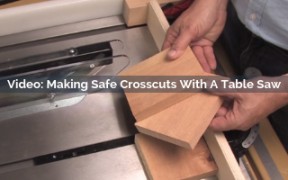
  11. Video: Making Safe Crosscuts With A Table Saw

    Video: Making Safe Crosscuts With A Table Saw

    How to make repeatable cuts on your table saw. A sacrificial fence is a replaceable fence that is attached to your miter gauge. The sacrificial fence provides additional support behind the work piece and prevents splintering on the back side of the cut. A stand-off block is a spacer that is attached to the guide fence. The stand-off block is used to register the work piece to make the same length crosscut with each pass. The stand-off block keep the work piece away from the fence during the cut, preventing any chance of binding or kick back.
    Read more