Page 104 - Learn Woodworking

  1. Video: Sanding Spindle Turnings On A Lathe

    Video: Sanding Spindle Turnings On A Lathe

    Learn how to sand your spindle turning projects smooth.
    Read more
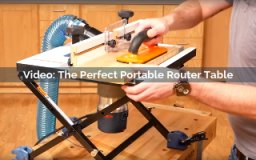
  2. Video: The Perfect Portable Router Table

    Video: The Perfect Portable Router Table

    This compact and portable router table is ideal for small shops and jobsite use. The folding base on the Rockler Convertible Benchtop Router Table can be quickly reconfigured for benchtop use, wall-mounted use, or collapsed entirely for storage or transport. In addition, the unique router plate lets you quickly remove the router for freehand use, then dock it again for table use—the compact size of the plate makes it light and nimble in freehand applications.
    Read more
  3. Video: Table Saw Push Sticks & Push Blocks

    Video: Table Saw Push Sticks & Push Blocks

    Table saw push devices are a key piece of woodworking safety gear. Push sticks and push blocks keep your hands a safe distance away from the table saw blade. You can make your own push stick or push block out of scrap stock. You can also purchase manufactured push devices that serve multiple functions.
    Read more
  4. Tips for Restocking Shop Consumables

    Tips for Restocking Shop Consumables

    Take a break from building your woodworking projects to make sure you’re stocked up on the supplies that you use on almost every project. Whether you’re sanding, doing a glue-up, applying finish or cleaning your bits and blades, there are supplies here you’re going to need for almost everything you build.
    Read more
  5. Video: What Is A Dado Joint

    Video: What Is A Dado Joint

    The dado joint is one of the strongest woodworking joints you can make. A dado joint is made from a three-sided channel cut across the grain of one work piece. A second, mating work piece fits into the slot. Dado joints are often used to build cabinets and bookshelves. Dado joints are easy to make using a table saw or router.
    Read more
  6. Video: Using Featherboards for Safe Table Saw Cuts

    Video: Using Featherboards for Safe Table Saw Cuts

    One of the best accessories or jigs for improving table saw safety and help prevent kickbacks is a featherboard. A featherboard is a jig with several angled fins. The featherboard is placed just in front of the blade. The fins flex to press the work piece against the fence and prevent it from moving backwards during the cut.
    Read more
  7. Video: Intro to Tongue and Groove Cabinet Doors

    Video: Intro to Tongue and Groove Cabinet Doors

    You can save a lot of money by making your own frame and panel cabinet doors. We show you how these cabinet doors are constructed using tongue and groove joinery. You'll also learn about the many design options that you can feature on your frame and panel doors, including multiple panels and glass.
    Read more
  8. Video: What is a Zero-Clearance Throat Plate

    Video: What is a Zero-Clearance Throat Plate

    A zero clearance insert or throat plate is one of the best upgrades you can make to a table saw. If you’re having trouble with tear-out on the bottom edge of your table saw crosscuts, or experienced the sudden shock of a narrow piece of drop-off wedging in between the saw blade and the opening in your saw’s throat plate, then you should get a zero clearance throat plate or insert.
    Read more
  9. Video: Making Cove Cuts with a Table Saw

    Video: Making Cove Cuts with a Table Saw

    How to use a cove cutting jig to make cove cuts with your table saw.
    Read more
  10. Video: Matching Wood Putty

    Video: Matching Wood Putty

    Learn how to choose and match the exact right color putty for your woodworking projects. Choose your putty to match the lightest background color in the wood grain.
    Read more
  11. Video: Prepping Wood For Water Based Finishes

    Video: Prepping Wood For Water Based Finishes

    Water-based finishes can raise the grain fibers, leaving a rough surface. Before applying water-based finishes, it's a good idea to wet the surface with water to intentionally raise the grain. Then sand the surface with 400 grit sandpaper to smooth the surface. Now you can apply the finish and it will not raise the grain.
    Read more