
 My Lists
 Classes
 Learning Center
Best Table Saw Jigs
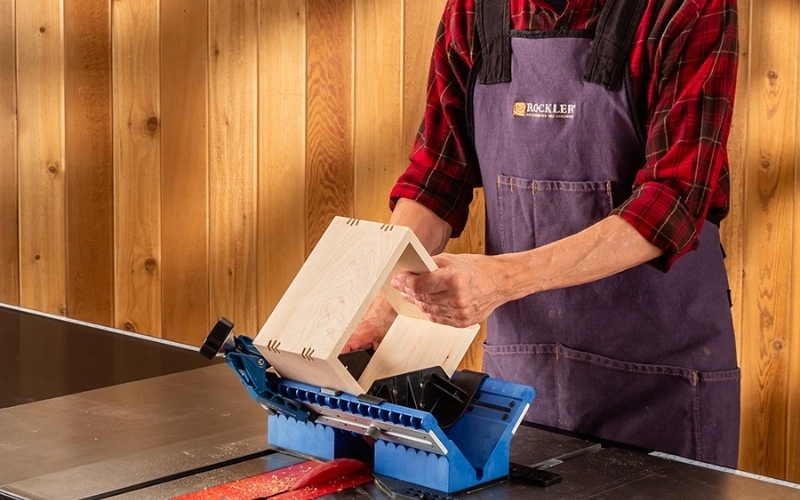
While the table saw is a wonderfully versatile tool all on its own, using it together with a selection of Rockler table saw jigs can help you maximize its cutting potential. Jigs can expand the saw's capabilities from basic cuts into joinery, give you better control over a wide range of workpiece sizes and even help improve cutting accuracy. You don't need to purchase every jig shown here, of course, but it's helpful to keep these options in the back of your mind as your woodworking interests and project requirements continue to expand and advance.
Here are nine of our best table saw jigs and a brief overview of they do:
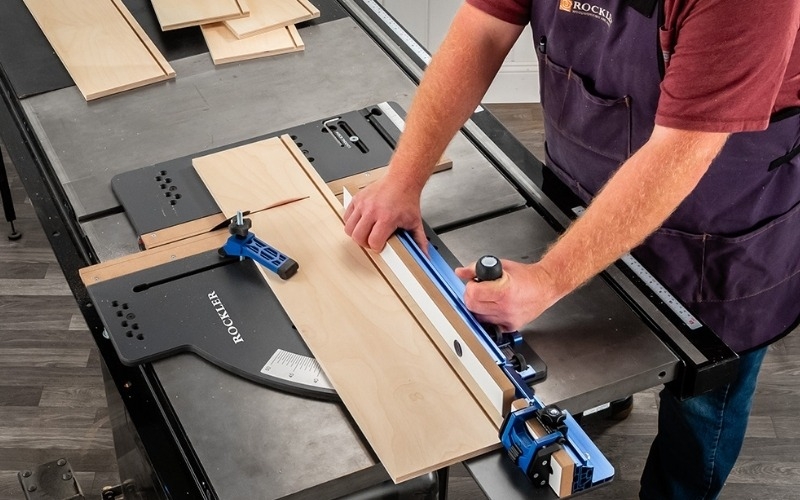
A crosscut sled rides in one or both of your saw's miter slots and provides a platform to rest workpieces on during cutting. Immobilizing them above the saw table this way provides significantly more control when crosscutting than using a miter gauge, especially when workpieces are long, heavy or otherwise unwieldy. A fence with "zero-clearance" capability supports workpieces from behind and lets you position a stop block when needed, for making repetitive cuts. Better designs, like our Table Saw Crosscut Sled shown here, let you swivel the fence for making precise angled cuts and offer a drop-off platform that catches offcuts when they are cut free, to minimize tearout.
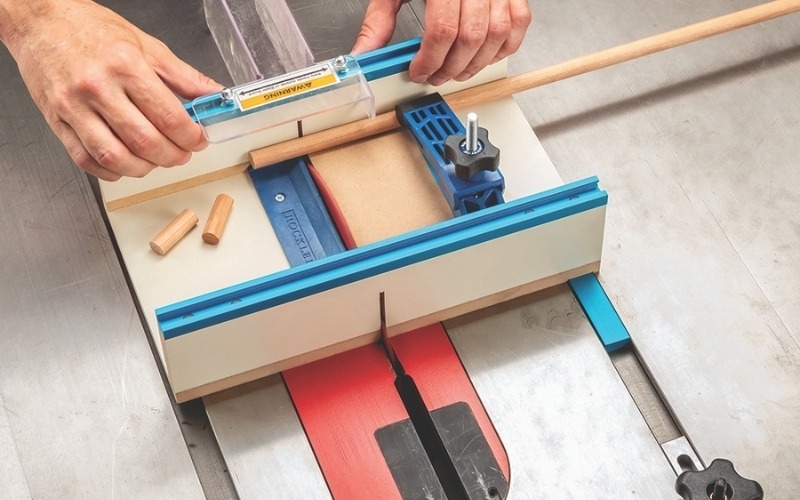
Even though it's small in stature, our Table Saw Small Parts Sled will come in mighty handy if you cut lots of small parts to length! It's great for cutting dowels, tenon stock and small moldings at a precise 90° angle, with little to no tearout. This miniature crosscut sled features zero-clearance support, which reduces the chance of small pieces getting stuck between the blade and throatplate or falling down inside the saw. A small plastic ramp on one side of the kerf carries the drop-off piece away from the blade. The sled even includes a miter track stop that limits its forward travel, to help keep the blade shielded throughout the cut.
3. Tapering Jig
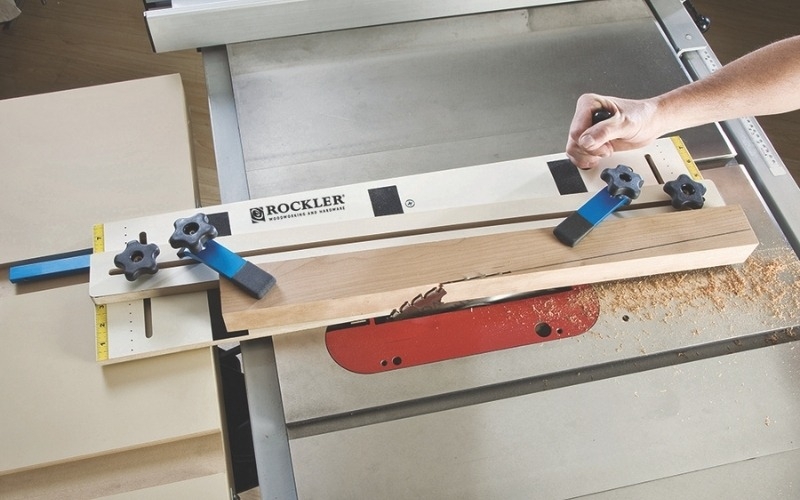
Plans for simple shop-made tapering jigs are easy to find, but few of them match the features and offer the same hand-protecting peace of mind that our Taper / Straight Line Jig does. Unlike typical hinge-style jigs that require you to manually control both the workpiece and the jig while cutting tapers, our design provides a platform to rest the workpiece on and a pair of hold-down clamps to lock it in place. It rides in your saw's miter slot, to track the cut accurately without needing the rip fence as a guide. And its adjustable fence accommodates many cutting angles for slicing tapers on chair legs, table legs and much more with ease.
4. Thin Rip Jig
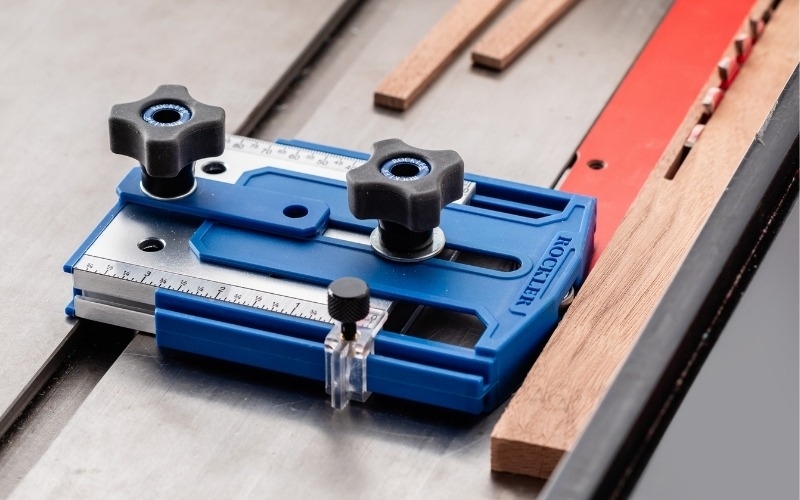
Sooner or later, you'll want to rip long, thin strips for shelf edging, glass retainers, Kumiko projects and so forth. The challenge to making thin rips is how to work so closely to the blade while maintaining control of the strips, ripping them to the exact same width and keeping your hands safe. Our full-featured Thin-Rip Table Saw Jig is the answer! It will help you cut thin strips from the edge of a wider board so the offcuts fall away safely from the blade on the left side, rather than becoming potentially trapped between the blade and rip fence. It also makes repetitive cutting easy. A thin hairline cursor and bright scale help you set precise cutting widths. Dual ball bearings provide a smooth, supportive contact surface when feeding a board against the jig and rip fence during cutting.
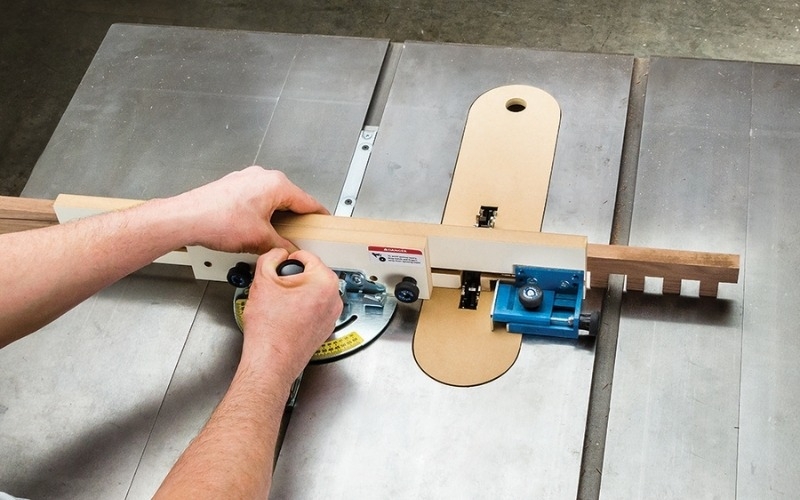
Interlocking half-lap joints are an excellent way to connect lattice, wine rack components and mullions for glass doors. Our Cross Lap Jig solves the problem of how to cut multiple lap joints with uniform spacing. Amounting to a modified adjustable fence for your table saw's miter gauge, it has a micro-adjustable indexing key that lets you dial in the precise thickness of the stock you are joining together. Just set your dado blade's width to match the width of the jig's key. Making each subsequent lap joint cut is as easy as pushing the key into the kerf you just made, then making the next cut. Anyone can do it!
6. Cove Cutting Jig
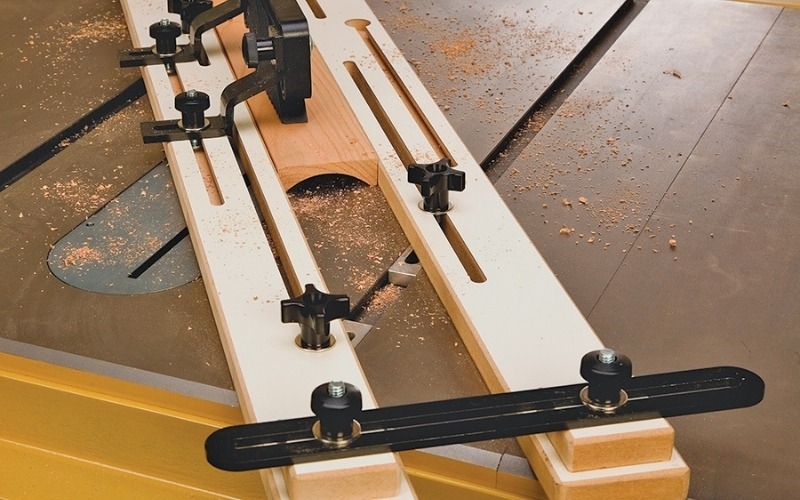
We'll admit that cutting coves on the table saw is one of the more radical operations it can perform, because you're pushing the stock through a series of shaving cuts at a diagonal angle to the blade! But the process is completely do-able for even novice woodworkers, provided you have a jig that locks down all the settings securely. Our Cove Cutting Jig meets the challenge. It accepts even wide, thick stock and lets you cut huge crown moldings that would cost a fortune from a lumberyard. An ingenious clamping system secures its twin fences using both 3/4" miter slots on the saw table.
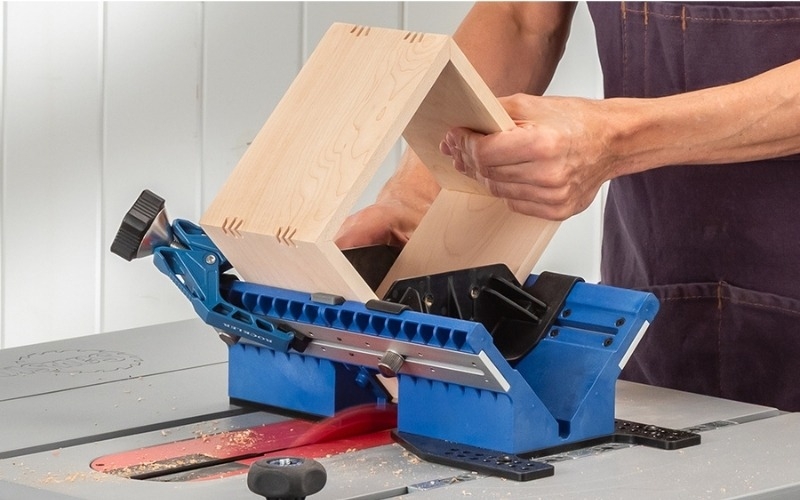
Spline jigs are modified sleds that hold boxes or picture frames at a 45° angle so you can guide them smoothly through the cut to form slotted corners. Filling these slots with thin wooden splines strengthens miter joints and creates eye-catching project details. Most spline jigs are limited to router table use, but our Deluxe Spline Jig adjusts to a wide range of spacing between the center of the miter slot and the center of the cutter. This flexibility lets you use it on both your table saw and router table to create customized geometric patterns and spacings unlike any other spline jig on the market.
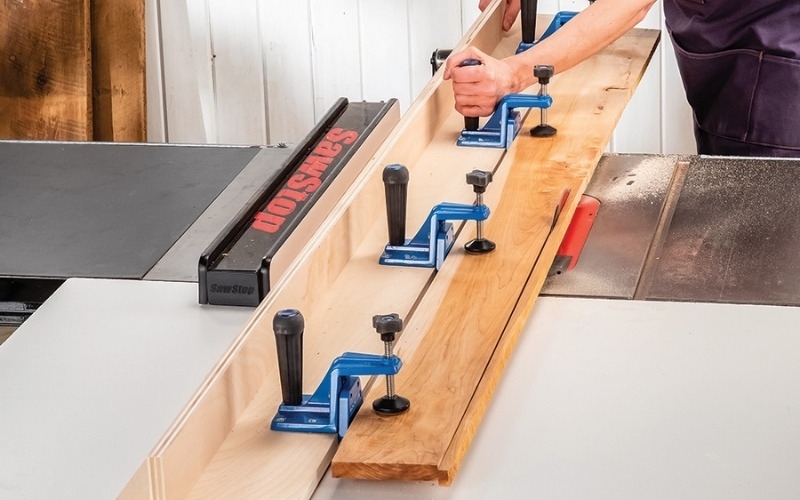
Slabs and rough-cut lumber often lack a straight reference edge, which is a must for safe ripping and squaring. If you don't have a jointer or a large band saw, creating that straight edge can be tough. That's where our Straight-Line Rip Hold-Down Clamps come in handy. They make it easy to create a sled that that holds the board and rides against your table saw's fence during cutting, resulting in a perfectly straight edge. Just mount the hardware to a long straight board or a plywood panel. The clamps have tall, easy-to-grip handles with rubber overmolds that provide comfort and control. With this jig, flattening waney or distorted edges is as easy as making a standard rip cut.
9. Sacrificial Fence Facing for Dado Blades
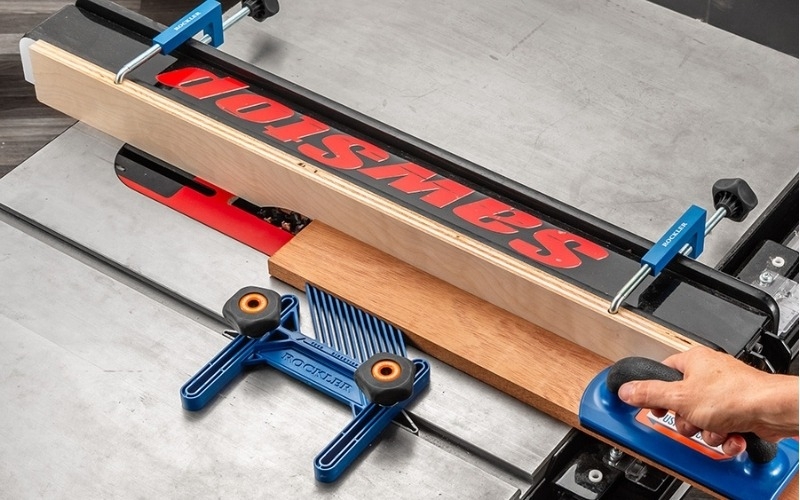
Rabbets and "stub" tenons are easy to cut on the table saw against the rip fence, but it requires that the dado blade be partially buried in a sacrificial fence facing. It's easy to make from any piece of flat, straight 3/4''-thick plywood or solid wood that's as long as your saw's rip fence and about the same height. You can mount the facing to the rip fence with ordinary clamps, but the clamp heads can get in the way during cutting. A better solution is to use a pair of our Universal Fence Clamps. Just drill two 3/8''-diameter holes into the top edge of the sacrificial fence near the ends. The adjustable, threaded posts of the clamps fit into these holes. Tighten the clamp knobs to secure the facing in place.


Keep the inspiration coming!
Subscribe to our newsletter for more woodworking tips and tricks


