
 My Lists
 Classes
 Learning Center
Top 12 Table Saw Accessories
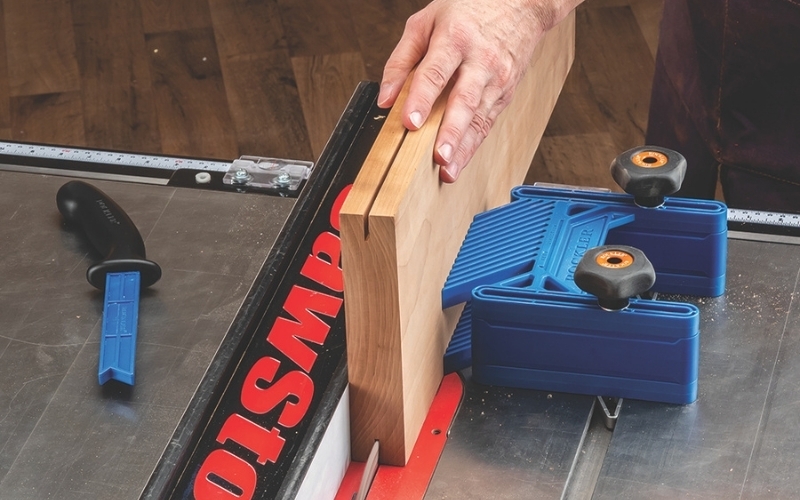
Over the last 25 years, the quality and features of new table saws have improved dramatically, particularly in terms of the accuracy and reliability of standard table saw rip fences. But no matter how old or new your table saw may be, a selection of accessories will help any saw cut more accurately and safely. Others improve the saw's mobility and make it more enjoyable to use. Here are 12 practical table saw accessories to add to your must-have list!
1. Precision Miter Gauge & 2. Auxiliary Fence
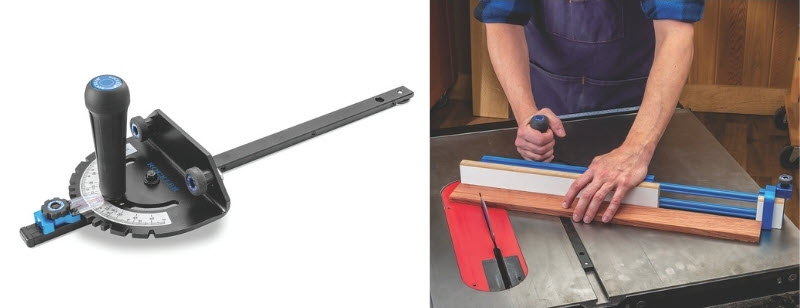
Every table saw comes with a miter gauge, but not all miter gauges are created equal. A miter gauge that fits loosely in the saw's miter slots compromises accuracy. So does a protractor scale with crude angle markings that make precise setups a guessing game. The upside is that you can replace your saw's inadequate miter gauge with a bounty of aftermarket options—especially if the miter slots measure a standard 3/4" x 3/8".
A good model to consider is our Precision Miter Gauge. It features accurately machined positive stops at the most used angles—0°, 15°, 22.5°, 30°, 45° and 60°—plus a miter bar with adjustable nylon set screws so you can adjust it for a snug, smooth-sliding fit. Our optional Miter Gauge Fence is designed to fit the gauge and expands to 24'' to provide ample workpiece support, with a flip stop to make repetitive crosscutting easy. If you don't own a crosscut sled, an extended fence of this sort makes the most of your miter gauge's crosscutting potential.
3. Quality General-purpose or Combination Blade
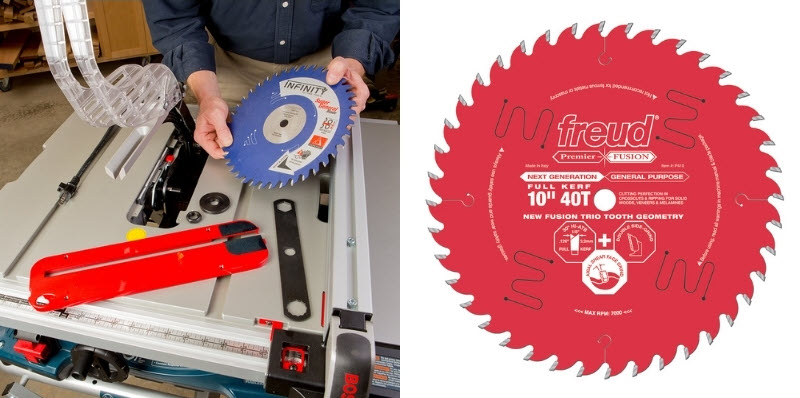
Shopping for saw blades can be bewildering, because the choices seem to go on and on. Thankfully, aftermarket saw blades made by leading blade manufacturers such as Freud, Amana, CMT, Infinity and Forrest are of excellent quality. Do you need every style of blade in your arsenal? Definitely no! If your interest in a blade amounts to making quality rip cuts, crosscuts and angle cuts in a variety of materials, look for a "general-purpose" or "combination" blade with around 40 teeth (for 10''-dia. blades). These blade types have teeth configured to make clean cuts with or across the grain in softwoods, hardwoods and plywood. Either will serve you well. Learn more about saw blades.
4. Stacked Dado Blade

Speaking of blades, if you own a 10" contractor, hybrid or cabinet table saw, it will be equipped to handle the weight and cutting dynamics of a stacked dado blade. A dado table saw blade consists of two outer blades with around 24 teeth and a series of two- to four-tooth chipper blades in varying thicknesses. Sandwiching different combinations of chipper blades between these outer blades enables you to cut dados, grooves, rabbets and tenons with great efficiency and precision. While not an inexpensive investment, a dado blade will go many years between sharpenings and usher in a wide range of joinery options. You won't regret the purchase!
5. Push Stick / Push Block
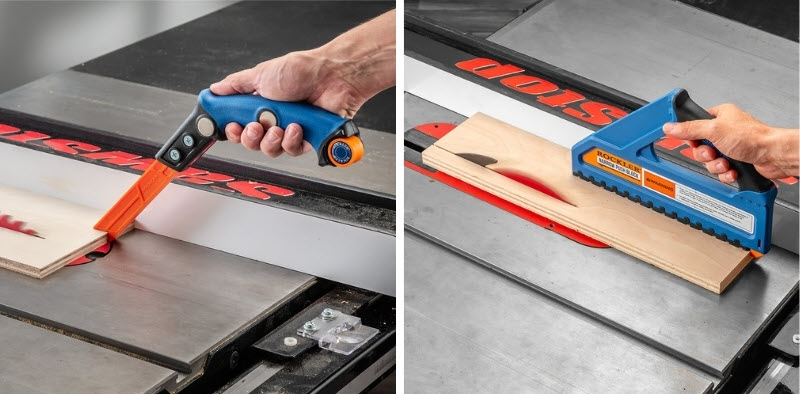
On nearly every woodworking project that involves a table saw, you'll make at least one rip cut on a workpiece narrower than 6". Every time you prepare to make this cut, reaching for a push stick or a push block should be an automatic part of your procedure. Aside from using your saw's guard and riving knife, there's no better way to protect your hands during rip cuts than to use a pushing device to guide the wood past the blade. Scrap-made push sticks cost little or nothing to make and work just fine. Among various options, we offer a Deluxe Push Stick with a replaceable orange tip and a D-Handle Narrow Push Block with a grippy bottom and a comfortable pistol grip. But regardless of the type of pushing device or its features, the important thing is to make these essential accessories part of your mandatory table saw safety equipment.
6. Featherboards
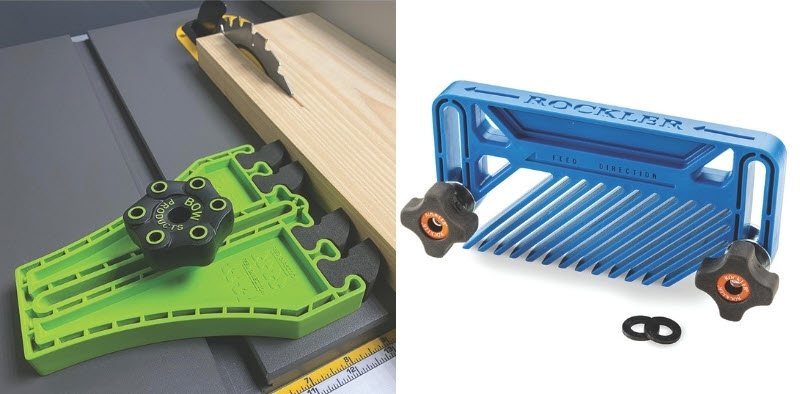
Table saws aren't sold with featherboards, but they should come as standard-issue table saw accessories, given how helpful they are! A featherboard has a series of flexible "feathers" along one edge and mounts in your saw's miter slots. It applies lateral pressure to workpieces, typically when making rip cuts, to keep the board pressed against the rip fence during the cut. A featherboard lets you cut longer workpieces more confidently as well as narrower workpieces more safely near the blade.
You can purchase doubled-up featherboards for cutting thick or tall stock and thin featherboards for thinner materials. Featherboards have short miter bars that friction-fit in the miter slot by tightening a knob. Some also include bolts for retrofitting them to T-slots, so they can be mounted vertically to rip fences or used on your router table, too. Others can be installed with powerful magnets anywhere on the saw table, for even more versatility.
7. Miter Angle Setup Blocks
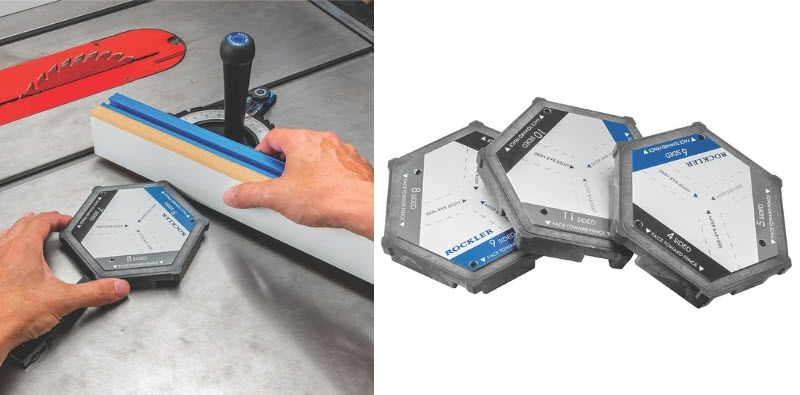
A protractor and bevel gauge can help you set your miter gauge fence to less typical angles, and both measuring tools should be in every woodworker's tool arsenal. But occasionally, you may need to cut pieces for a polygon that's more complex than a four-sided picture frame. That's when these Perfect Miter Setup Blocks will really earn their keep. They make it a snap to dial in the exact miter gauge settings for frames with up to 12 sides. Each block has three miter slots for three specific polygons: a hexagon, heptagon, octagon, and so forth. Just fit the setup block over your miter bar, snug the block up to the fence, and tighten the knob to lock in your setting. Now you can make your cuts with the utmost confidence that all the miter angles will line up perfectly. No need for math, reference charts, test cuts, or trying to compensate for inaccuracies in your miter gauge scale.
8. Digital Angle Gauge
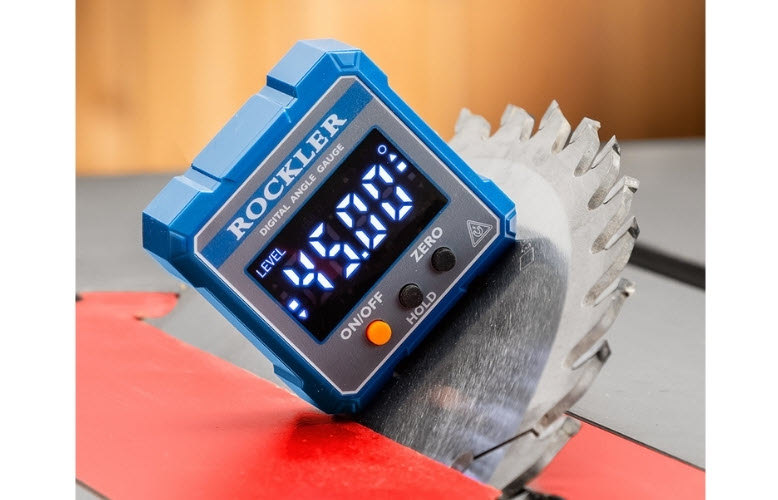
When the time comes to tilt a table saw blade for making bevel cuts, the built-in bevel gauge of many saws is reasonably accurate, but it probably won't be dead on. Alternately, you can set a bevel gauge to the angle you need and then crouch down and squint to see if the blade is laying flush against it. But the easiest way to set bevel angles reliably is to use a digital angle gauge instead. Our Rockler version has a magnet to hold it securely on the blade. Its bright, high-contrast LED display instantly provides a true angle reading to .05° resolution and is easy to read from any angle. The zero button calibrates the angle gauge to any reference surface. Here's how to know with digital certainty that your blade is tilted precisely every time.
9. Zero-clearance Insert
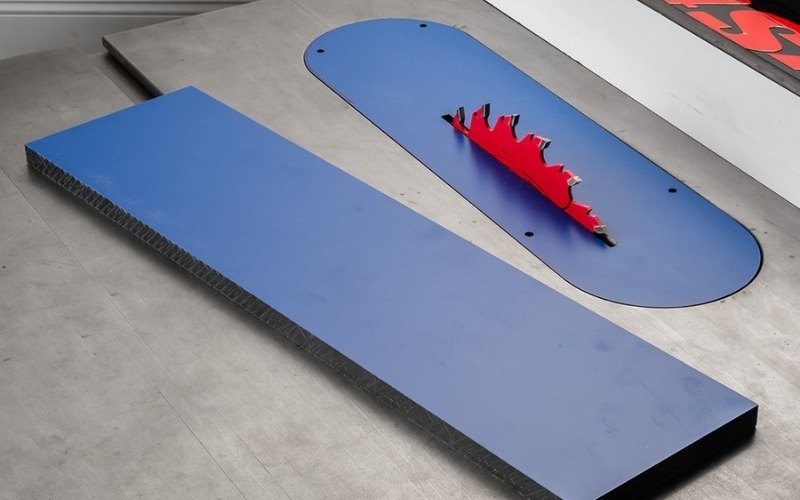
Isn't it annoying when narrow offcuts fall down inside your table saw because the standard throatplate's blade slot is too wide? Ever wished you could reduce the amount of tearout that happens on the bottom faces of workpieces with the standard throatplate? Well, here's the best solution to both problems: step up to a zero-clearance throatplate instead. It enables you to raise the blade up through the throatplate blank to cut a slot that exactly matches the blade width. This way, there's simply no extra room for rogue offcuts to fall through, and workpieces are supported right up to the blade to minimize splintering. You can purchase blanks of solid phenolic, like those shown above, and make a zero-clearance throatplate using your standard throatplate as a template. Or the manufacturer of your table saw may offer a zero-clearance throatplate to make the process easier. Many woodworkers make zero-clearance throatplates from scrap material. All these options provide the same helpful benefits.
10. Crosscut Sled
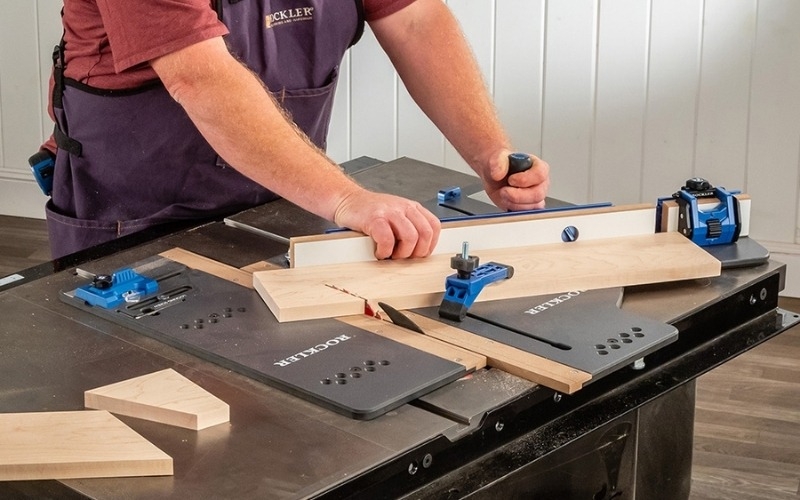
There are numerous jigs that can improve the accuracy and versatility of your table saw. Learn about some of the best jig options. A favorite of most woodworkers is the venerable crosscut sled. It rides in one or both of your saw's miter slots and provides a platform to rest workpieces on during cutting. Immobilizing them above the saw table this way provides significantly more control when crosscutting than using a miter gauge, especially when workpieces are long, heavy or otherwise unwieldy. A fence with "zero-clearance" capability supports workpieces from behind and lets you position a stop block when needed, for making repetitive cuts. Better designs, like our Table Saw Crosscut Sled shown above, let you swivel the fence for making precise angled cuts and offer a drop-off platform that catches offcuts when they are cut free, to minimize tearout.
11. Outfeed Support
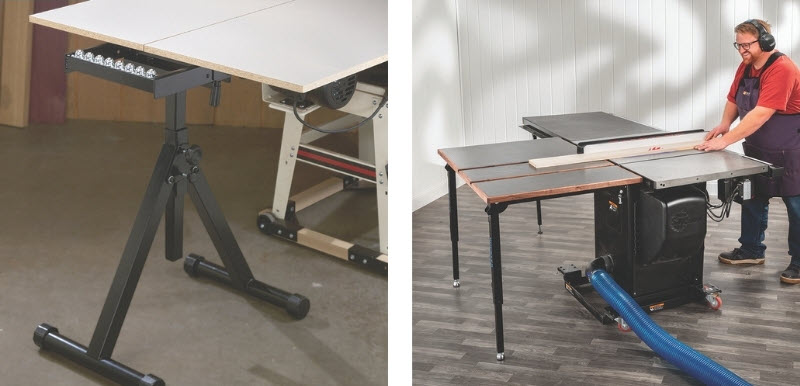
It's difficult to avoid the "seesaw scenario" when cutting anything overly long without some form of outfeed support: the back end of the board or plywood sheet dangles precariously off the back of the saw, you cut the piece in two and the offcut tips upward and falls backward. This not only damages the offcut when it crashes to the floor, but you also risk losing control of the operation, putting your hands in danger close to the blade. That's why roller stands were invented—to keep long workpieces from tipping. But outfeed support can take any number of different forms. A workbench or worktable slightly shorter than your saw forms excellent outfeed support. Or consider a hinged or knockdown framework like our Rock-Steady Outfeed Kits. A pair of telescoping legs let you quickly set up and level a tabletop you build behind the saw. When you're done cutting, just fold the outfeed table down or disconnect it easily from the saw to save floor space.
12. Mobile Base
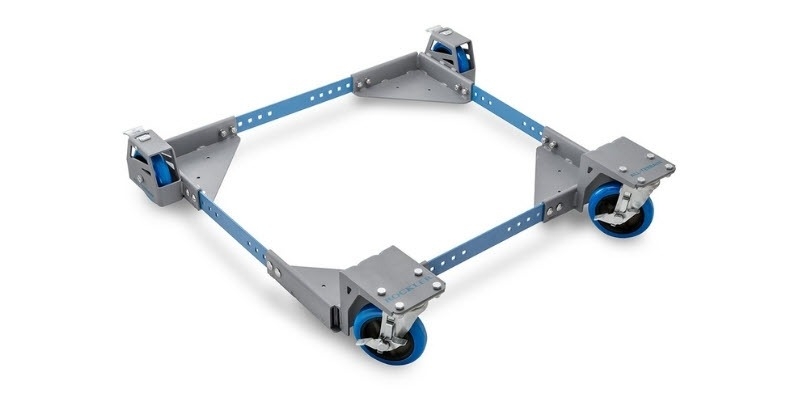
Casters in the shop are wonderful, aren't they? They enable virtually every fixture or machine in a woodworking shop to be movable. If you don't have the luxury of leaving your heavy table saw parked in the same spot, a mobile base is the answer! Our All-Terrain Mobile Base expands from 18'' x 18'' up to 28'' x 28'' in 1'' increments to fit your table saw's specific footprint, and we offer extension stretcher sets for adapting it to saws with long side extension tables. Oversized casters roll smoothly over rough or uneven shop floors, and the front two steer and lock for maximum convenience. Moving the saw doesn't have to be a backbreaking experience!
-

-
-
-
-
-
Thin Kerf Riving Knife for Laguna Fusion Table SawsSpecial Price $49.50 Each Regular Price $55.00 Save 10%
-
-
-
-
-


Keep the inspiration coming!
Subscribe to our newsletter for more woodworking tips and tricks


