Page 13 - Cutting and Shaping Wood

  1. Video: How To Safely Plane Thin Panels

    Video: How To Safely Plane Thin Panels

    How to safely plane thin panels using your thickness planer. As a panel gets thin, it is more likely to bow under the pressure of the front feed roller of your thickness planer. If the panel bows, the planer's spinning cutter head can shatter the front edge of your panel or even worse kick the panel back out.
    Read more
  2. how to change a router bit

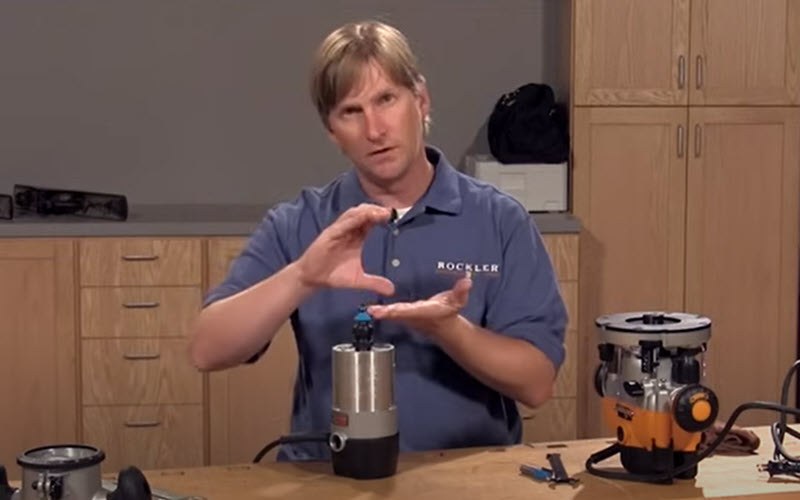
    Video: How to Change a Router Bit

    Learn how to install or change a router bit in a portable router or router table. We demonstrate how to change a router bit in a portable router with two wrenches and how to change the bit in a router with a collet lock. You'll also learn how to change
    Read more
  3. how to change a drill bit

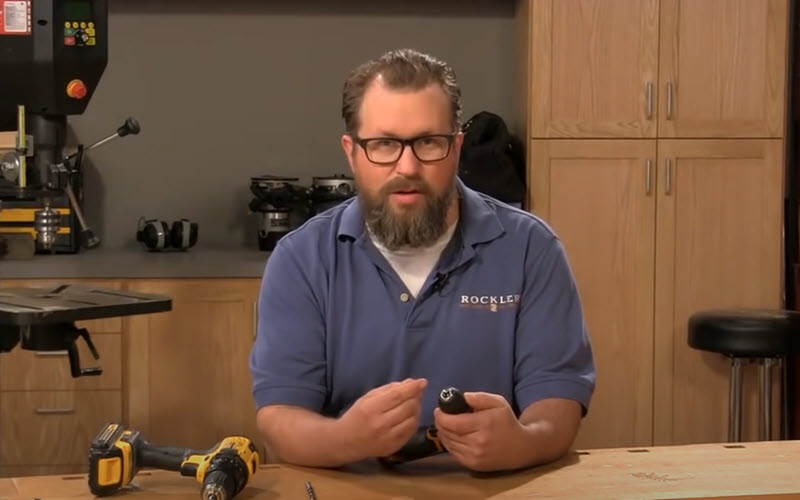
    Video: How To Change A Drill Bit

    Woodworkers must often change drill bits. It's not a difficult task, but it's important to change drill bits correctly for the best results. In this beginning woodworker Skill Builder lesson, we show you how to install and replace drill bits in both keyed
    Read more
  4. Video: Top 5 Drill Bits for Woodworking Projects

    Video: Top 5 Drill Bits for Woodworking Projects

    Today I'm going to show you five different types of drill bits that are especially useful to woodworkers. Whether you're new to woodworking or have years of experience, you're going to want these drill bits in your tool collection.
    Read more
  5. gluing drawer

    Joinery for Drawers

    What's the best joinery method for drawers? The answer: there are several reliable options. The best one for you will depend on the tools and skill at your disposal, and on the importance you place on durability, aesthetics and last but not least, getting done fast. In this article, we'll outline a few of the most common drawer making methods, and suggest a few tools that will make the process easier and more accurate.
    Read more
  6. Adding Wood Carving Reliefs to Southwestern Style-Furniture

    Adding Wood Carving Reliefs to Southwestern Style-Furniture

    If carving isn't for you or isn't in your repertoire, Southwestern-style projects like this entry bench still look great without the extra detail. We understand that carving is not something every woodworker would choose to do. It is, however, a traditional element in Southwestern furniture.
    Read more
  7. Bending Wood - Part I

    Bending Wood - Part I

    Nature hates straight lines, and as woodworkers we spend a huge amount of time and effort in making things straight. But curves can and should be a large part of your woodworking. There are several methods for forming wood into curves, and the next few blog posts will explore these techniques. We will be looking at simple force bending, kerf bending, lamination and steam bending.
    Read more
  8. Bending Wood Part II - Bent Lamination

    Bending Wood Part II - Bent Lamination

    We started this wood bending series exploring simple and kerf bending. In this edition, we look at forming wood parts using thin laminates. As we all know, the thinner the part, the easier it will conform to a curve. Lamination is the process of bending many thin parts together and holding them in the desired shape until the glue between them dries. Once dry, the resulting part will pretty much hold its shape forever.
    Read more
  9. Bending Wood Part III - Steam Bending

    Bending Wood Part III - Steam Bending

    So far in this series we have looked at simple wood bending in thin stock or with kerf cuts, and forming bent wood parts through laminating thin strips together on a form. In this final installment, we will discuss steam bending wood. Steaming actually changes the cellular structure of wood to make it more pliable. As the wood cools and dries clamped to a form, it very quickly regains most of its original stiffness, but in the shape of the form.
    Read more
  10. Video: Gluing Up Wood Panels with Butt Joints & Biscuits

    Video: Gluing Up Wood Panels with Butt Joints & Biscuits

    The butt joint (taking narrower pieces and gluing them up into a wider panel) is a fundamental woodworking joint when building with solid wood. In this video, you'll learn the basic process for gluing boards together to make a larger wood panel.
    Read more
  11. Why Use Featherboards?

    Why Use Featherboards?

    If you've recently purchased a router table, a table saw or any other stationary power tool, you may have noticed that your new prized possession didn't arrive with every related (and often, very desirable) piece of equipment imaginable already in the box. Don't feel cheated. By convention, power tools come with the equipment necessary to perform their basic functions safely, under typical operating conditions - and that's about it.
    Read more