Page 14 - Cutting and Shaping Wood

  1. Bending Wood Part III - Steam Bending

    Bending Wood Part III - Steam Bending

    So far in this series we have looked at simple wood bending in thin stock or with kerf cuts, and forming bent wood parts through laminating thin strips together on a form. In this final installment, we will discuss steam bending wood. Steaming actually changes the cellular structure of wood to make it more pliable. As the wood cools and dries clamped to a form, it very quickly regains most of its original stiffness, but in the shape of the form.
    Read more
  2. Video: Gluing Up Wood Panels with Butt Joints & Biscuits

    Video: Gluing Up Wood Panels with Butt Joints & Biscuits

    The butt joint (taking narrower pieces and gluing them up into a wider panel) is a fundamental woodworking joint when building with solid wood. In this video, you'll learn the basic process for gluing boards together to make a larger wood panel.
    Read more
  3. Why Use Featherboards?

    Why Use Featherboards?

    If you've recently purchased a router table, a table saw or any other stationary power tool, you may have noticed that your new prized possession didn't arrive with every related (and often, very desirable) piece of equipment imaginable already in the box. Don't feel cheated. By convention, power tools come with the equipment necessary to perform their basic functions safely, under typical operating conditions - and that's about it.
    Read more
  4. Getting Dadoes and Plywood Thickness to Match

    Getting Dadoes and Plywood Thickness to Match

    Have you ever used a 3/4" router bit to cut a dado for a plywood shelf, only to discover that "three-quarter inch" plywood isn't all that it claims to be? It can be a shock the first time; you're left a plywood-to-dado fit that has more than just a little "slop". In fact, the typical sheet of 3/4" plywood actually measures close to a hefty 1/32" less than its nominal thickness would lead you to believe.
    Read more
  5. Hand Cutting Dovetails with a Handsaw

    Hand Cutting Dovetails with a Handsaw

    The layout of dovetails involves cutting the tails (the pink wood on the left) and pins (the beige wood on the right), both cut to match the other. I like hand-cutting dovetails, and I’ve literally cut thousands of them. As a result, I try to execute them in a manner that hearkens back to the day when dovetails were all done by hand, and guys got paid to get them done fast and right.
    Read more
  6. Improving Table Saw Performance

    Improving Table Saw Performance

    As durable as most table saws are, they do require attention from time to time. If you're table saw is is leaving rough saw marks, burning wood or bogging down when you rip average stock thicknesses, chances are something's amiss, and it's time to diagnose the problem.
    Read more
  7. Woodworking Tools Angle Scales and Terminology

    Woodworking Tools Angle Scales and Terminology

    Not all woodworking machinery angle scales are created alike. In fact, there are two different conventions for the calibration of angle scales in common use on woodworking machinery. One type of scale is calibrated to treat a square cut as a 90 degree cut, while the other scale treats a square cut as a 0 degree cut. Along with that, the terms used in woodworking to describe angled cuts don't make the origin of the angle measurement perfectly clear.
    Read more
  8. Best Scroll Saw for Your Budget

    Best Scroll Saw for Your Budget

    Fretwork and intricate cutting don't have to be expensive, there are some very affordable scroll saws on the market. The late Rodney Dangerfield probably would have felt a solidarity with scroll saws because, among all other woodworking machines, these seem to get the least respect — or more fairly, the least amount of press. When we need to cut curves, we tend to head to the band saw, and that’s a logical choice.
    Read more
  9. Fence Systems for Accurate Table Saw Ripping

    Fence Systems for Accurate Table Saw Ripping

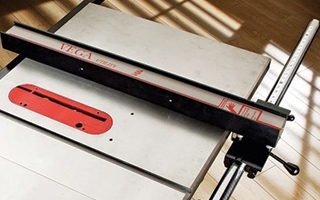
    Ripping wood is a primary function of the table saw, and because its importance, many manufacturers pay particular attention to the quality the rip fence on the saws they offer. Still, many factory fence systems lack the reliability and precision that would qualify them for exacting work.
    Read more
  10. Video: Router Bits for Beginners

    Video: Router Bits for Beginners

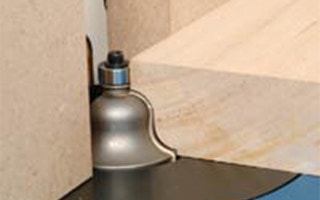
    In this video the most common types of router bits are explained for the novice woodworker. The Rockler router bits highlighted in this video include: Straight, Rabbeting, Round Over, Flush Trim, Roman Ogee, Chamfer, and Undersized Plywood Bits.
    Read more
  11. Power Planer or Jointer? Why Not Both?

    Power Planer or Jointer? Why Not Both?

    Modern power planers are equipped to plane and do many of the same tasks as a shop jointer, but with added portability outside your workshop. The worlds of woodworking and construction are similar but don’t always overlap. Tools used for one aren’t always suitable for the other. Some newer power planers, like this one from Porter-Cable, feature a switch that allows you to change the direction that chips and dust blow out.
    Read more