
 My Lists
 Classes
 Learning Center
How to Use a Friction Finish
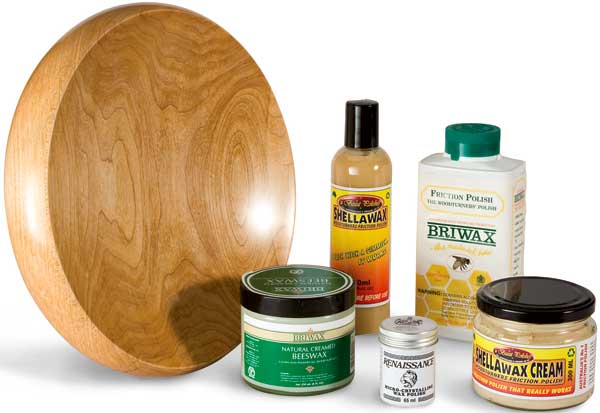
I just can’t deny it – I am an instant gratification sort of woodworker. So, when I am looking for a clear finish on my turned pieces – and I predominantly turn bowls – I almost always reach for a friction polish. They are easy to apply, build up quickly and look great.
What’s a Friction Polish?
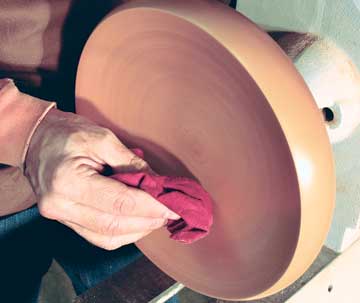
A friction polish is designed to be applied to wood and then burnished to make the product flow – to be smoothed out over the prepared surface. Burnishing (rubbing vigorously with a cloth or piece of ultra-fine steel wool) can be hard work on a flat piece of wood. But it’s pretty easy if the wood is spinning on a lathe. For that reason, friction polish is a real favorite for turners. Common formulas for friction polish feature a combination of shellac and a wax of some type. They can be formulated in a liquid or found in bar form – like the widely used HUT Products Bar.
Just Do It
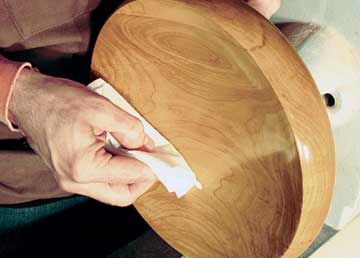
There are a couple of ways to apply a liquid friction polish. You can wipe on a light coat while the piece is stationary on the lathe (or off of the tool), then spin the piece and use a cloth dampened with the polish to smooth out and flow the finish evenly across the piece. This is an instance where light applications are better than heavy coats.
As a "plunge right in there" type, I prefer the second method: applying the finish with a soft cloth right to the spinning bowl. I use a moderately fast speed and just wipe it on. I like to have a strong directional light aimed at the piece, so I can see the change as I apply the product.
Different brands of friction polish vary a bit as to the proper mode of application – so read their instructions and experiment in order to get your best results.


Keep the inspiration coming!
Subscribe to our newsletter for more woodworking tips and tricks


