
 My Lists
 Classes
 Learning Center
What Is This?! How to Use a Doweling Jig
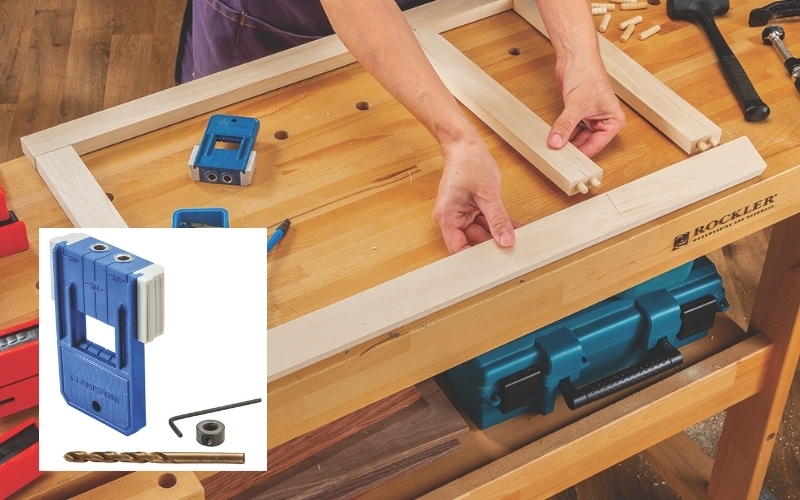
Want to join two pieces of wood without using visible screws or fasteners? Wooden dowels are an excellent solution, and they're easy to install using a doweling jig. A doweling jig helps you drill matching holes in both workpieces so the dowels line up correctly when inserted, creating a strong, clean joint.
Explore Doweling Jig Features & Details
In this edition of "What Is This?!" Adam shows how to set up and use a Rockler Doweling Jig and how it helps take the guesswork out of lining up a dowel joint.
What Does a Doweling Jig Do?
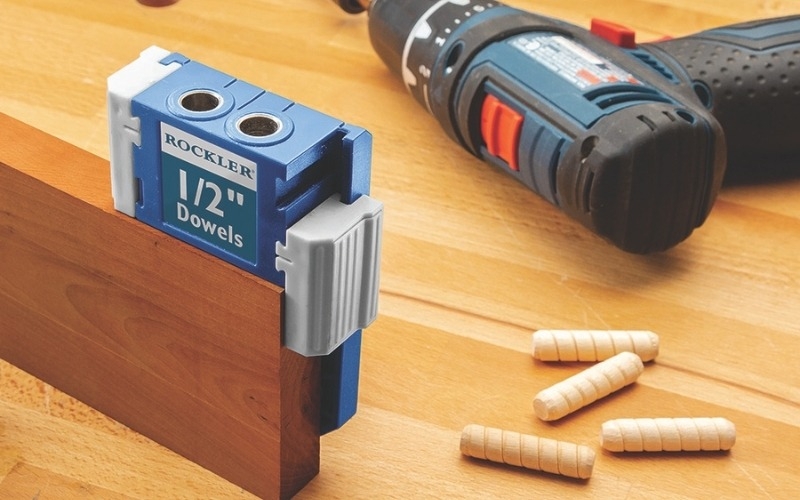
A doweling jig has two or more hardened steel bushings that are used to guide a drill bit for drilling holes in the ends, edges or faces of workpieces. These holes locate the exact position for inserting short wooden dowels into both halves of the joint, so the dowels slip into place easily and align the joint parts correctly. After the joint is assembled, the dowels are hidden inside.
Dowel joints have been used by woodworkers for centuries and are one of the earliest forms of mechanical joinery. They're commonly used to assemble face frames, picture frames, cabinet carcasses, boxes, panels, bookcases and larger frameworks of all sorts.
How a Doweling Jig Works
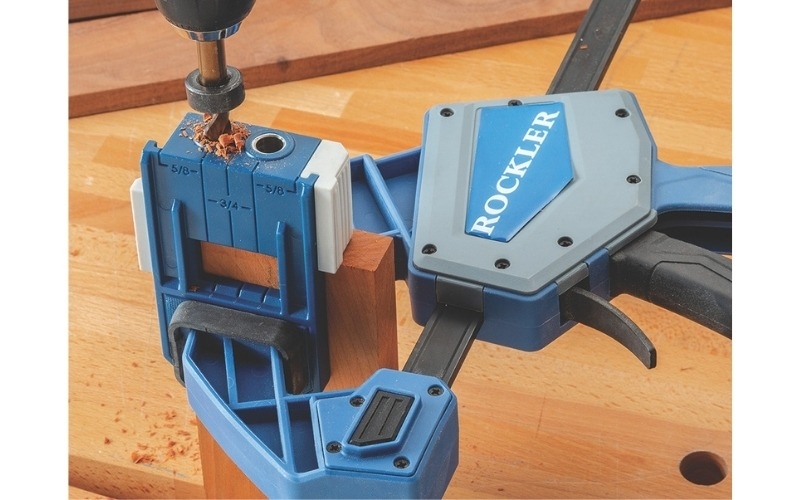
Using a Doweling Jig is easy! Set the joint parts together in their correct assembled orientation and draw a long line across the joint to mark its center. Install a stop collar on the drill bit and use the Doweling Jig's molded depth scale as a reference to set the bit's drilling depth. Then position the Doweling Jig on one joint part, aligning its reference line to the line you drew on the workpiece. Clamp the jig to the workpiece and drill holes for the joint to the full depth established by the stop collar. Repeat the process to drill the mating joint part. Finish up by inserting wood glue into the dowel holes, installing the dowels and bringing the joint together with clamps until the glue dries.
Which Dowel Sizes Do I Need?
For optimal joint strength, plan for the dowels to occupy about half the thickness of the joint parts. So, use 1/4''-diameter dowels for 1/2''-thick joints, 3/8''-diameter dowels for 3/4''-thick joints and 1/2''-diameter dowels for 1''-thick joints.
| Joint Thickness | Dowel Diameter |
| 1/2" | 1/4" |
| 3/4" | 3/8" |
| 1" | 1/2" |
Also Worth Knowing
Unlike some other dowel joints, Rockler Doweling Jigs have movable stops that provide helpful alignment for 2''-wide joint material or to position the jig correctly against the end of a part. The jigs also come with the required drill bit, stop collar and a hex wrench, so you can get to work quickly.


Keep the inspiration coming!
Subscribe to our newsletter for more woodworking tips and tricks


