
 My Lists
 Classes
 Learning Center
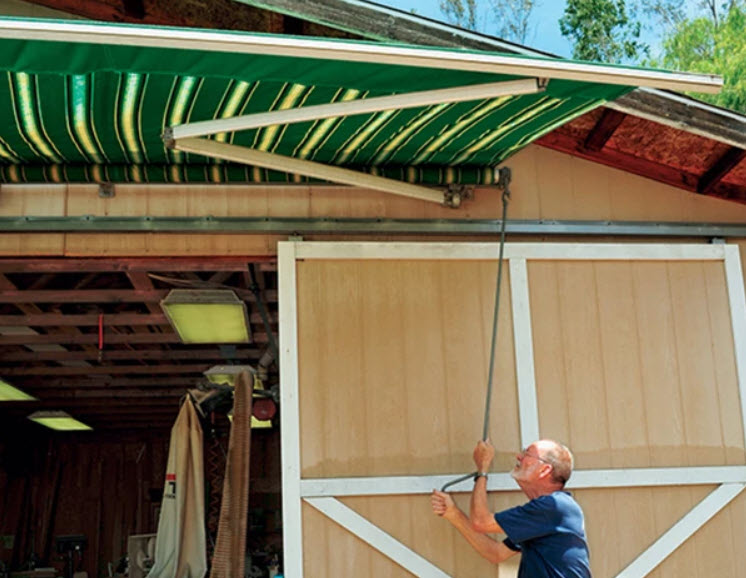
Escape the heat and stay productive. Learn how to create a mobile woodworking workshop setup for summer that lets you take your projects outdoors with ease.
The Mobile Workshop
During the summer, the uncomfortable heat of an enclosed, uninsulated shop can stop a woodworking project dead in its tracks. Garages, sheds and pole barns can reach temperatures 10 to 20 degrees higher than the outside air due to thermal mass and poor ventilation. That's not just uncomfortable — it's a genuine safety concern. Sweat dripping onto cast iron table saw surfaces accelerates rust. Fatigue sets in quickly, dulling your focus at exactly the moment that precision or caution matters most.
Traditional cooling solutions often disappoint in this environment. A box fan pushes hot air around. A window AC unit struggles against an uninsulated metal door that radiates heat like a griddle. You, and your equipment, end up running in conditions that fight against you at every turn.
The smarter move is what experienced woodworkers are calling the Open-Air or Open-Garage approach: making your heaviest machinery and work surfaces mobile, using more portable power and hand tools, and strategically migrating specific tasks — layout, hand-tool work, sanding, finishing — to shaded outdoor spaces or cooler parts of your property. A well-planned mobile woodworking workshop setup doesn't replace your enclosed shop; it extends it seasonally. With the right caster and mobile base solutions under your heavy tools, moving between environments becomes a practical reality rather than a logistical headache.
The Portable Foundation: Mobile Bases and Workbenches
Creating a reliable portable woodworking station for summer starts with one core idea: stability isn't about where you work — it's about what you work on.
Priority one is getting your heavy items moving safely. Quality mobile bases with locking casters let you roll a table saw or bandsaw out onto the driveway, lock it down and get to work quickly. That locking mechanism is everything. Without it, you're fighting the tool. Look for wide-stance bases with large-diameter casters rated well above your tool's weight that can roll easily over rough surfaces — wobbly machinery outdoors is a safety issue, not just an inconvenience.
For the actual work surface, folding and MFT-style (Multifunction Table) workbenches are the summer woodworker's best friend. They pack flat, set up fast, and provide a sturdy, large, and level work surface. A quality MFT is just as useful indoors as out. So having one around is practical, no matter the season.
Keeping the footprint small pays real dividends. Lean thinking strips the setup down to only what the project demands — no dragging out equipment that won't get touched. Pair that with a compact rolling cart or mobile wood storage, and your whole outdoor operation can occupy a single parking space.
The Portable Power Kit: Cordless Freedom and Dust Extraction
Building a capable outdoor woodworking setup no longer means compromising on power — today's cordless tool platforms genuinely deliver shop-quality results in the driveway.
That shift has been driven largely by the track saw and the random-orbit sander. Modern cordless track saws make clean, accurate cuts on sheet goods and solid lumber that are on par with a table saw. And thanks to significant improvements in battery power and run time, cordless sanders offer comparable performance to corded sanders. As the Woodworkers Guild of America notes, modern cordless tool platforms now provide the torque and runtime necessary for full-scale furniture builds.
For your portable shop needs, consider this essential portable power trio:
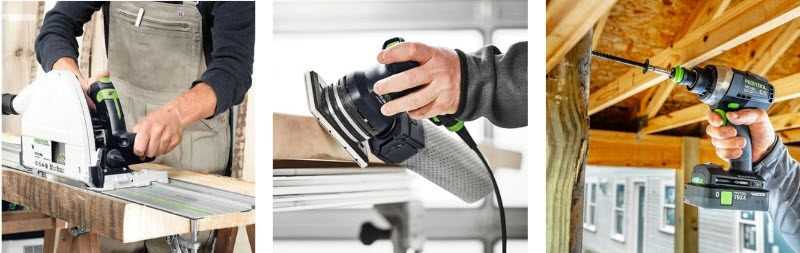
Track Saw — replaces the table saw for outdoor cuts
Drill/Driver — handles joinery, hardware, and assembly anywhere
Random-Orbit Sander — delivers finish-ready surfaces without a stationary setup
Dust extraction is the aspect of outdoor woodworking most woodworkers overlook until the neighbors notice. A portable dust extractor connected directly to the tool keeps fine particles out of the air and off the driveway. It’s important to understand how portable dust extraction works so you can match the right dust extraction unit to your tools to deliver the CFM they need for peak efficiency. Learn more about it by clicking here.
Battery management is what keeps the momentum going. A simple charging station near the garage door — a power strip on a shelf, a handful of batteries rotating through — means you're never waiting on a charge mid-cut. Jobsite versions of popular tools are worth a serious look here, too. They're designed for exactly this kind of on-the-fly flexibility: rugged, compact, and optimized for battery efficiency over extended sessions.
Embracing the Quiet: The Hand Tool Summer Advantage
Hand tools are the ultimate summer woodworking secret. A hand tool setup gives you quieter work sessions, near-zero dust clouds, and precise, satisfying craftsmanship.
With your mobile workstation dialed in, the tools you reach for next make all the difference. Power tools generate heat, noise, and fine wood dust. Hand tools flip that equation entirely. A sharp hand plane produces shavings you can sweep into a pile and toss in the compost. A chisel and mallet create almost no airborne particles, which means your cleanup takes just minutes.
The noise factor is just as significant. Power tools routinely exceed 90 to 100 decibels — loud enough to draw complaints and cut your working hours short. Hand tools? A card scraper whispers. A hand saw hums. That means you can keep working into a cool summer evening without guilt. Your neighbors stay happy, and you get more project time.
As The English Woodworker puts it: "The perfect hand tool workshop isn't about having every tool, but about the freedom to work anywhere without a power cord." That philosophy — minimal tools, maximum skill — is perfectly suited to a flexible summer setup. A few well-tuned hand tools can replace several bulky machines for finishing tasks:
- Chisels handle joinery and fine fitting that would otherwise mean hauling out a router
- Card scrapers deliver a finish-ready surface with zero sandpaper dust
- Hand saws break down stock cleanly, especially for shorter crosscuts on a portable bench
Logistics of the Driveway Shop: Neighbors, Shade, and Safety
Working outside your traditional shop solves a lot of problems, but it introduces a few new ones worth thinking through before you drag your bench down the driveway.
The outdoor woodworking setup you build is only as good as the planning behind it. First, be considerate of your neighbors. Most residential areas follow noise ordinances that restrict loud activity before 8:00 a.m. or after 9:00–10:00 p.m. But even within those windows of time, a screaming miter saw on a quiet Sunday morning earns no goodwill. In practice, a simple rule works well: save power tool cuts for mid-morning to early afternoon, and shift to hand tool work once the neighborhood gets quieter. Your neighbors will appreciate it, and you'll enjoy the process more.
Second, don’t underestimate the sun. Direct sunlight doesn't just make you uncomfortable — it actively damages your work. According to The Honest Carpenter, “if you want to avoid wood warpage, you have to avoid the sudden uneven changes in its moisture content” that direct sun exposure can cause in wood during assembly. A pop-up canopy solves both problems at once, shading you and your lumber so you can continue to work outdoors. Natural shade from a tree line or garage overhang works just as well if you're thoughtful about positioning your setup.
This brings up the "heated garage paradox" — one of the most common sticking points when woodworkers ask how to keep a woodshop cool in summer. Running fans and a portable AC in an enclosed shop often costs more energy and comfort than simply moving outside into a breeze. An open-air setup under shade cools you naturally, and you can pull a folding MFT-style (Multifunction Table) workbench outside in minutes rather than sweltering inside all afternoon.
Finally, don't skip the safety basics of working on uneven ground. Driveways slope by design — usually 1 to 2% grade for drainage — and a rocking workbench creates real accuracy and injury risk. Wedge shims, adjustable feet, or a thick rubber mat under your bench legs can level things out fast. If you're rolling tools outside, build or fit a mobile base with locking casters so nothing wanders on a grade. Get these logistics dialed in, and you'll have the foundation for a genuinely flexible summer workflow — which is exactly where we're headed next.
Summary: Your Blueprint for a Flexible Summer Workflow
Planning your open-air or open-garage workshop carefully will ensure that it moves beyond a just great idea to a hard-working solution for getting projects done in the summertime.
Start with a quick audit of what you already own. Walk through your current toolset and ask one simple question: can this tool move? Circular saws, random-orbit sanders, routers, and cordless drill/drivers are obvious yesses. A 500 lb. cabinet saw is a harder conversation — but even that becomes manageable with the right hardware underneath it. And once you have your machines outfitted with mobile bases, they’ll be useful when you’re working entirely indoors, too. Rearranging your shop for better workflow or making room for a car becomes easy to do, even when working alone. According to Timber Biscuit Woodworks, mobile setups like these can unlock up to 40% more usable workspace in a standard two-car garage — that's a significant return on a modest investment.
One high-quality mobile base or folding bench this season is all it takes to change how you work. You don't need to overhaul your entire setup overnight. Pick the single tool that frustrates you most because it's stuck in one spot, and solve that problem first. Progress builds momentum.
Think about your workflow timing, too. Heavy milling — jointing, planing, resawing — generates the most noise and the most dust. Shifting those tasks to mid-mornings keeps you on good terms with your neighbors and takes advantage of cooler temperatures before the afternoon sun turns your driveway into a sauna. Once the rough milling is done, save the hand-tool assembly and detail work for the shaded porch or the breezy side of the garage. That rhythm — power tools in the cool morning, hand tools in the comfortable afternoon — is a genuinely enjoyable way to spend a summer woodworking day.
Here's a quick action checklist to get you started this weekend:
Audit your toolset — flag every tool that's already portable or could be with a mobile base
Identify your one "stuck" tool — choose the biggest bottleneck and plan to mobilize it first
Map your timing — schedule loud, dusty milling for mid-mornings; hand-tool and assembly work for afternoons
Prioritize footprint flexibility — choose setups that adapt to where you are, not just where your shop is
Start small, then scale — one mobile base, one outdoor project, one season at a time
The beauty of this approach is that it's cumulative. Every small improvement compounds into a setup that's more responsive, more enjoyable, and more capable. Think of it this way: your mobile shop isn’t a compromise—it’s a different kind of capability that will keep you cool and productive, right through the summer months.


