
 My Lists
 Classes
 Learning Center
Saw Blade Glossary
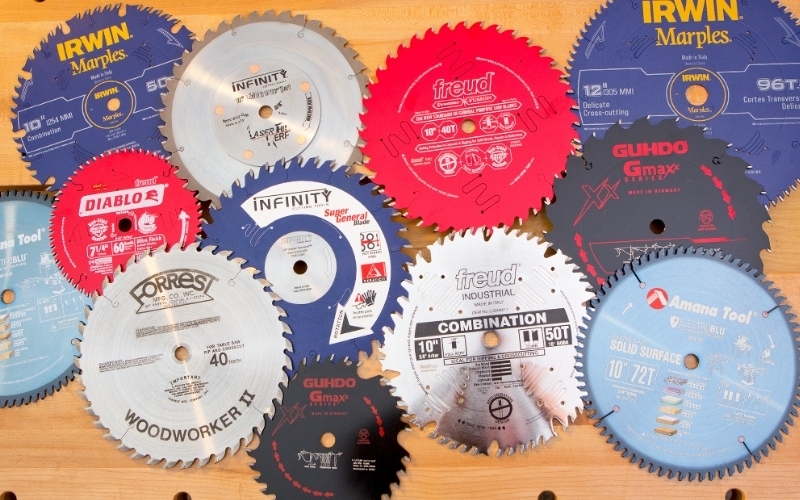
The following list includes terms common to choosing and using saw blades. Gaining a working familiarity with these terms will help you better understand a wide variety of technical blade features.
Alternate Top Bevel (ATB): Tooth grind with alternating left- and right-facing bevels that slice wood fibers cleanly. Common on crosscut and general-purpose blades.
Arbor: Shaft on the table saw that the blade mounts onto. On full-size consumer table saws, its diameter is typically 5/8''. Blade holes must match the saw’s arbor size.
Arbor hole: Center hole in the blade that must fit the saw’s arbor correctly for safe, accurate cutting.
Bevel angle: Side angle ground into a tooth. It affects how cleanly the blade cuts across or with the grain.
Blade body: Flat steel plate that carries the teeth. A quality blade body stays flat and runs true during cutting.
Blade guard: Safety cover that helps shield the blade during use. It should be used whenever the cut allows
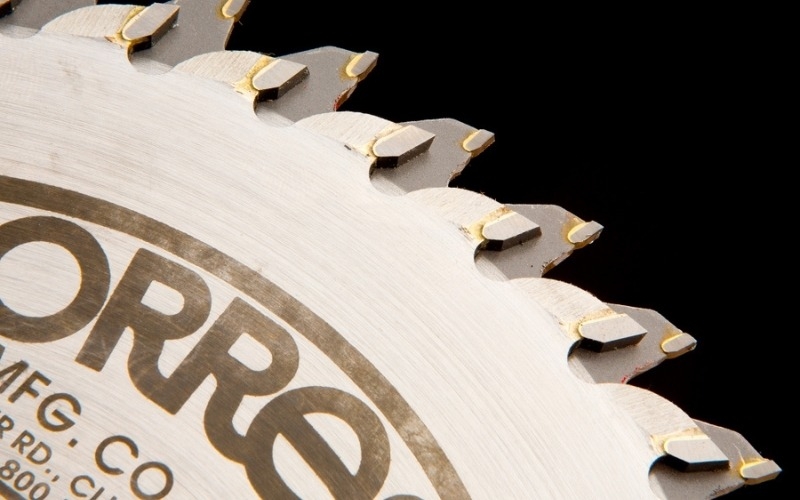
Carbide: Hard, wear-resistant material often used for blade teeth. Carbide-tipped blades stay sharp longer than plain steel blades and handle tough cutting jobs well.
Combination blade: Blade designed for both ripping and crosscutting. It is a practical, economical choice for general table saw use.
Crosscut blade: Blade made for cutting across the wood grain. It usually has more teeth, smaller gullets and a low hook angle than other blades for making smoother cuts.
Dado blade: Specialty blade set used to cut grooves, dadoes and rabbets. Many dado sets include two outer blades and a selection of chipper blades in varying tooth widths.
Expansion slots: Openings in the blade body that help reduce heat buildup, noise and warping during cutting.
Flat Top Grind (FTG): Tooth style with a square, flat top. It cuts quickly with the grain and is common on rip blades.
Full kerf blade: Standard-width blade for larger contractor and cabinet table saws, often about 1/8" wide. It is durable but requires more motor power than a thin kerf blade.

General-purpose blade: Versatile blade for common ripping and crosscutting tasks. It is useful when one blade must handle many jobs.
Gullet: Space between blade teeth. It carries sawdust away from the cut and helps prevent overheating.
High Alternate Top Bevel (Hi-ATB): Tooth grind with steeply angled tips that make very clean cuts. It is often used to cut plywood, melamine, veneer and other materials prone to chipping.
Hook angle: Forward or backward lean of blade teeth. A higher hook angle cuts more aggressively; a lower angle gives more control but a slower feed rate.
Kerf: Width of material removed by the blade during a cut. Thinner kerfs waste less wood and require less cutting power from the saw.
Kickback: Dangerous reaction where wood is thrown back toward the user, typically when the saw kerf closes around the blade. Sharp blades, proper setup and safety devices such as riving knives help reduce the risk.
Kickback-limiting tabs: Raised metal shoulders behind the teeth on some blades. They help limit how much material each tooth can bite, reducing the chance of aggressive feeding and kickback.
Laser-cut plate: Blade body cut with precise manufacturing methods. It helps improve balance, accuracy and smooth operation.

Miter cut: Angled cut across the face of a board. A good crosscut or combination saw blade helps produce clean miter cuts.
Negative hook angle: Tooth angle that leans back from the direction of rotation. It feeds more slowly and helps reduce grabbing, especially in non-ferrous metals, plastics and some specialty cuts.
Non-stick coating: Blade coating that helps reduce pitch buildup, friction, and heat. It can make cleaning easier.
Pitch: Sticky resin and sap from wood that can build up on blade teeth. Pitch buildup increases friction and heat, which can leave burned residue on the blade or workpiece.
Plate: Steel disc portion of the blade, not including the teeth. A stable plate helps the blade cut accurately.
Positive hook angle: Tooth angle that leans forward into the cut. It feeds quickly and is common on ripping blades.
Raker tooth: Flat tooth that clears material from the cut. It is often used in combination blade tooth patterns.
Ripping blade: Blade made for cutting with the wood grain. It usually has fewer teeth and larger gullets for fast sawdust removal.

Riving knife: Safety device behind the blade that helps keep the kerf open. It reduces the chance of pinching and kickback.
Scoring blade: Small blade used on some industrial table saws to pre-cut the surface before the main blade cuts. It helps reduce chipping.
Stabilizer: Washer-like accessory mounted beside the blade to reduce vibration. It may improve cut quality on some saws.
Tearout: Chipped or splintered wood fibers left along a cut edge. Sharp blades, proper tooth count, scoring cuts and zero-clearance inserts can help reduce tearout.
Thin kerf blade: Blade that cuts a narrower slot than a full kerf blade. It removes less material and works well on lower-powered jobsite and portable saws.
Tooth count: Number of teeth on a blade. More teeth usually give smoother cuts; fewer teeth usually cut faster.
Tooth grind: Shape ground into the blade teeth. Common grinds include ATB, FTG, TCG, and Hi-ATB.

Triple Chip Grind (TCG): Tooth pattern that alternates chamfered and flat teeth. It works well on laminate, melamine, plastics and non-ferrous metals.
Vibration: Unwanted blade movement during cutting. It can cause rough cuts, noise, burning or reduced accuracy.
Zero-clearance insert: Table saw insert with a slot cut closely around the blade. It supports wood fibers and helps reduce tear-out.


Keep the inspiration coming!
Subscribe to our newsletter for more woodworking tips and tricks


