
 My Lists
 Classes
 Learning Center
Table Saw Blades: A Complete Guide
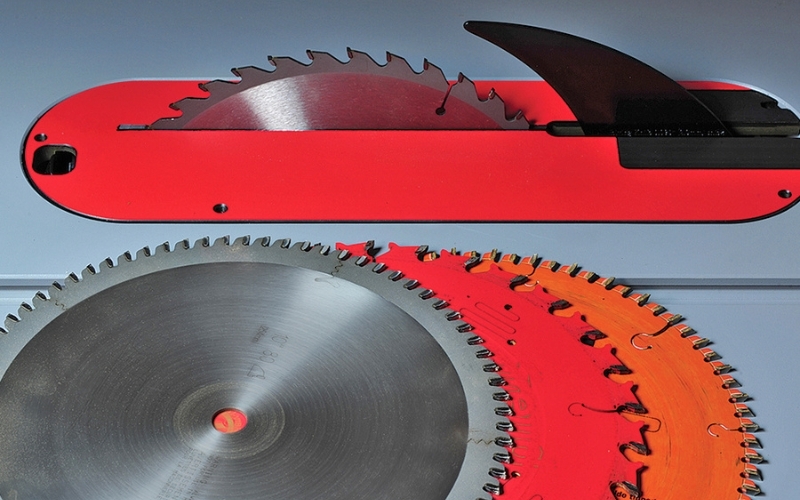
While you may evaluate your table saw's performance in different ways, how cleanly, smoothly and accurately it cuts is surely your most important concern. And that stands to reason, because wood is expensive. We want every type of cut to maximize our lumber yield and minimize the need for cleaning up sloppy, ragged edges due to a blade that cuts poorly.
Making smooth, safe cuts with your table saw depends on having the right blade or blades for the saw and the types of cuts you are making. There's no shortage of quality options, and the sheer volume of available blades could bewilder even an experienced woodworker. That's why we've put together this article. It's part glossary and part guide with important basic information to help you make smart choices for the cutting tasks at hand.
Saw Blade Essentials
Blade engineers design table saw blades to deliver optimal results in particular cutting operations. You can buy dedicated blades for ripping and crosscutting lumber and cutting veneered plywood and panels. There are specialty blades for cutting laminates and plastics, melamine and even non-ferrous metals. You may also have seen general purpose and combination table saw blades, which are designed to work well for both crosscutting and ripping. These various types of blades differ for the most part in terms of their number of teeth, the size of the gullets, their tooth configuration and the hook angle (angle of the tooth mounted on the blade). Let's briefly review each of these features.
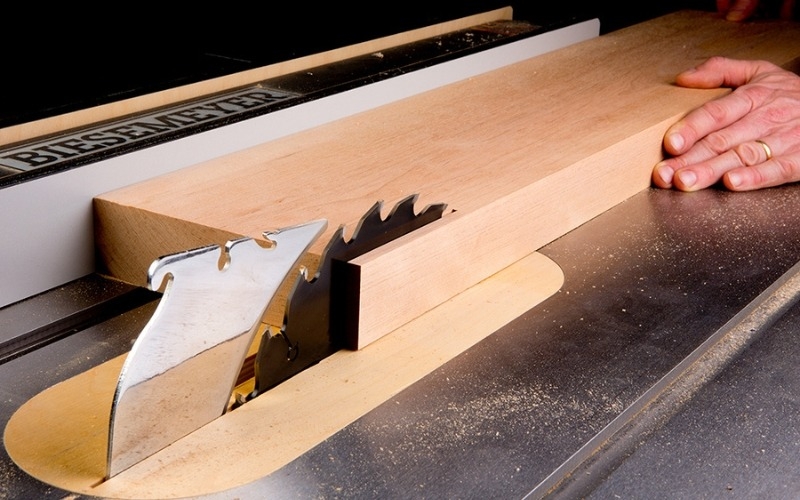
Number of Teeth: In general, saw blades with more teeth yield a smoother cut, and blades with fewer teeth remove material faster. A 10" blade designed for ripping lumber, for example, usually has as few as 24 teeth and is designed to quickly remove material along the length of the grain. A rip blade isn't designed to yield a mirror-smooth cut, but a good rip blade will slice through hardwood with little effort and leave a clean cut with minimal swirl marks.
A crosscut blade, on the other hand, is designed to produce a smooth cut across the grain of the wood without splintering or tearing. This type of blade will usually have 60 to 80 teeth, and the higher tooth count enables each tooth to remove a smaller amount of material. A crosscut blade makes many more individual cuts as it moves through the stock than a ripping blade and, as a result, requires a slower feed rate. The result is cleaner edges and a smoother cut surface. With a top-quality crosscut blade, the cut surface will appear almost polished.
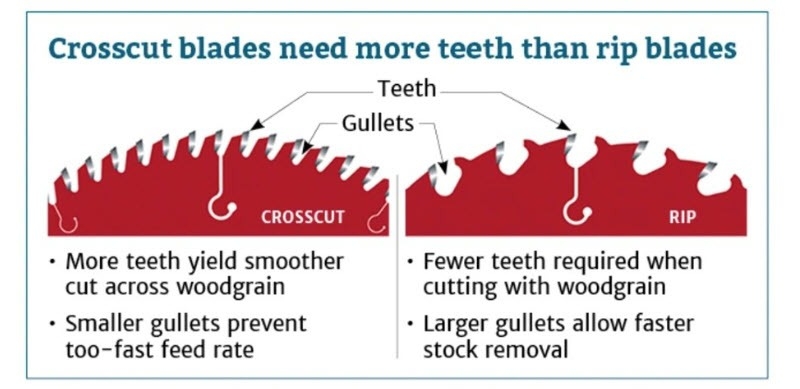
Gullets: The gullet is the space in front of each tooth that removes chips as they are cut free. In a ripping operation, the feed rate is faster, and the chip size is bigger, so the gullet needs to be deep enough for the large amount of material it has to handle. In a crosscutting blade, the chips are smaller and fewer per tooth, so the gullet is much smaller. The gullets of a combination blade are designed to handle both ripping and crosscutting. The large gullets between the groups of teeth help clear out the larger amounts of material generated in ripping. The smaller gullets between the grouped teeth inhibit a too-fast feed rate in crosscutting.
Tooth Styles and Configuration: The shape of the teeth and the way they are grouped on the blade also affect the way the blade cuts. The configuration of the teeth on a saw blade has a lot to do with whether the blade will work best for ripping, crosscutting or cutting laminates. There are five primary styles of blade teeth you'll encounter when shopping for blades: Flat-Top (FT), Alternate Top Bevel (ATB), High Alternate Top Bevel (Hi-ATB), Triple Chip Grind (TCG) and Combination (Comb).
Flat-top teeth are used on blades for ripping hardwood and softwood. Because wood is much less likely to chip and splinter when it is being cut with the grain, a rip blade is designed to quickly and effectively remove material. The flat-top tooth is the most efficient design for cutting and raking material out of the cut.

Alternate Top Bevel teeth alternate between a right- and left-hand bevel. This configuration yields a smoother cut when crosscutting solid wood and veneered plywood. The alternating beveled teeth form a knife-like edge on either side of the blade and make a cleaner cut than flat-top teeth.
High Alternate Top Bevel (Hi-ATB) teeth are used for extra-fine crosscutting and to cut materials surfaced with melamine, which is prone to chipping. The high bevel angle increases the knife-like action at the edge of the blade.

Triple Chip Grind (TCG) teeth excel at cutting hard materials such as laminates, MDF and plastics. The TCG configuration is also used for non-ferrous metal cutting blades. Teeth alternate between a higher "trapeze" tooth with clipped corners that removes less material and a flat "raking" tooth that cleans away what the clipped teeth leave behind. The net effect reduces chipping.

Combination (Comb) teeth are designed for both crosscutting and ripping. They are arranged in groups of five— four ATB teeth and one FT— with a large gullet between the groups.
Hook Angle: Hook angle has an important effect on blade operation. A blade with high positive hook angle (say, 20°), where the teeth tip forward, will yield a very aggressive cut and a fast feed rate. A low or negative hook angle, where the teeth are more upright or tip slightly backward, will slow the feed rate and will also inhibit the blade's tendency to "climb" the material being cut. A blade for ripping lumber on a table saw will generally have a high hook angle, where an aggressive, fast cut is usually what you want. A crosscutting blade, on the other hand, will have a low or even a negative hook angle to inhibit overly fast feed rate and produce smoother, cleaner cuts across the grain.

What About Thin-Kerf Blades?
Many blade types are available in both full-kerf and thin-kerf varieties. Full-kerf blades typically cut a 1/8" slot and are intended for use on saws powered by 2 HP or greater motors. Thin-kerf saw blades have teeth less than 1/8" wide and were developed for use on jobsite table saws with smaller motors. Because a thin-kerf blade removes less material than a full-kerf blade, it requires less power to operate and allows lower-powered saws to cut material at an appropriate feed rate without the risk of bogging down during the cut. (Bogging down causes excessive friction; as a result, the blade heats up and can become distorted or burn the cut surface.)
Thin-kerf blades offer no significant advantages to contractor or cabinet table saws. Saws above about 1-1/2 HP have ample power to drive full-kerf blades. Additionally, their standard riving knives will be too thick to accommodate the narrower saw kerf of a thin-kerf blade, which will cause the narrow kerf to bind against the riving knife and interrupt the cut. If you use a jobsite saw, be sure to equip it with only thin-kerf blades if the manufacturer specifies them.
How Do I Choose the Right Saw Blade?
Now that you know some of the particulars about tooth configurations and saw blade styles, choosing one or a few blades for your table saw becomes a bit easier. Rockler offers a broad assortment of saw blades to suit most saws and applications. A good way to narrow your options and focus the search is to answer these three key questions:
1: What type of table saw do I have, and what blade diameter does it require?
If you own a jobsite or other portable table saw, chances are your saw's smaller motor and its riving knife system will require using a thin-kerf blade. Larger contractor and cabinet saws have sufficient power for using any variety of full-kerf blade. Most consumer table saws take 10''-diameter blades these days, whether they are jobsite, contractor or cabinet saw models. But if you have a newer portable battery-powered table saw, it might require a smaller-diameter blade or even a metric blade size, depending on the manufacturer.

2: What kind of cuts do I need to make?
For everyday ripping and crosscutting applications of about equal frequency, both combination and general-purpose blades in the 40- to 50-tooth count offer strong cutting performance and excellent value. They won't make rip cuts as quickly as a dedicated ripping blade will, nor will they polish the edges quite as smoothly as a crosscutting blade. But you won't have to switch between two blades for making these common cuts, which is a big convenience and a significant savings or buying two blades. Combination and general-purpose blades balance the number of teeth, hook angle and tooth shape to give you the best results in a wide variety of materials.

3: What material do I need to cut?
A sharp, clean general-purpose or combination blade will cut hardwoods, softwoods, plywood, MDF and hardboard about equally well. But if the day should come when you need to make super-clean cuts in melamine shelving or cut plastics and non-ferrous metals, your "standard" blade won't do. You'll need to choose a specialty blade designed for these materials to cut them cleanly and safely.
So, which blade is right for you? Collect your answers to these questions and go to rockler.mom, where you can search our selection of table saw blades by brand, blade type, diameter, material to be cut and price. There's bound to be a blade that meets your cutting needs, saw type and budget.
How Do I Take Care of My Blades?
While saw blades don't require much regular maintenance, you can extend their like-new cutting performance by following a simple cleaning and inspection regimen from time to time. Learn the process in our guide: How to Clean and Maintain Saw Blades.
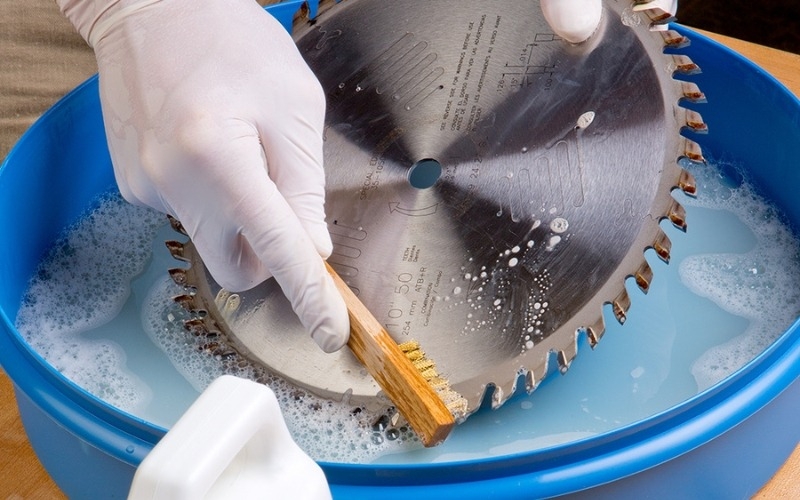
However, if your blade seems to cut poorly even when it's clean, it's possible that the blade assembly needs realignment within the saw.


Keep the inspiration coming!
Subscribe to our newsletter for more woodworking tips and tricks


