
 My Lists
 Classes
 Learning Center
Table Saw Terminology
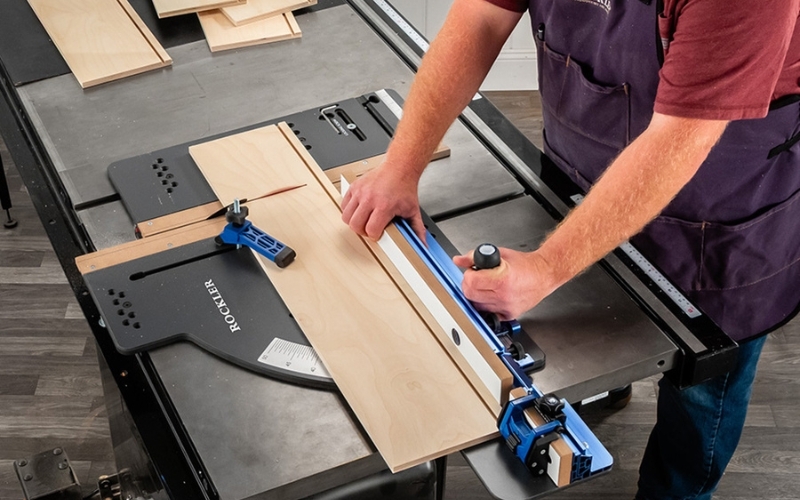
The following list includes terms common to using and maintaining a table saw. Gaining a working familiarity with these terms will help you better understand the scope of what a table saw can do and how to use the machine more effectively.
ATB (Alternate Top Bevel): Blade teeth with alternating left- and right-facing bevels that slice wood fibers cleanly. Excellent tooth configuration for crosscuts, plywood and general woodworking.
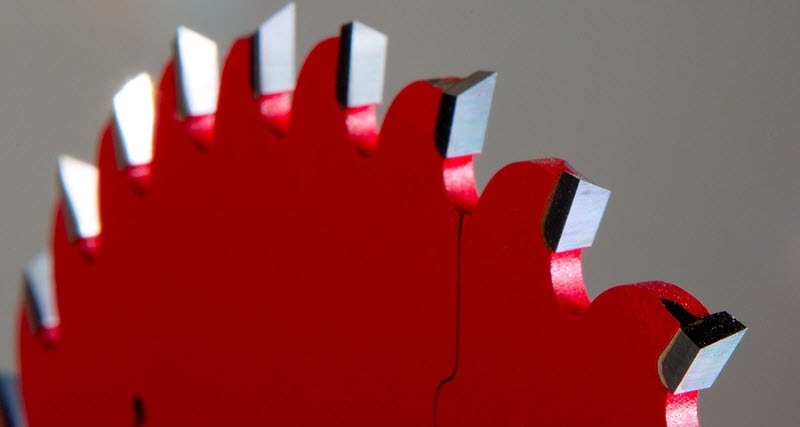
ATB-R (Alternate Top Bevel with Raker): Combination blade tooth pattern consisting of several ATB teeth followed by one flat raker tooth. Balances clean cutting and chip removal. Best for combination blades used for both ripping and crosscutting.
Bevel cut: Cut made with the blade tilted to create an angled edge.
Box joint: Corner joint made with interlocking square fingers that fit into matching slots.

Burning: Dark marks left in the wood due to excess friction caused by a dull or dirty blade, slow feed rate or rip fence misalignment.
Cabinet table saw: A heavy-duty table saw with an enclosed base and powerful motor capable of high precision, typically used in dedicated workshops for demanding woodworking projects.
Chamfer cut: Beveled cut along an edge, often used to soften corners or create a decorative detail.
Combination tooth: General-purpose blade tooth pattern, often ATB plus FTG or ATB-R, designed to handle multiple types of cuts reasonably well. Best for all-purpose consumer table saw use.
Compound cut: Cut that combines a miter angle and a bevel angle.
Contractor table saw: A mid-size table saw with more power and stability than a jobsite saw, often used by serious DIYers and woodworkers who need performance without the size of a cabinet saw.

Cove cut: Concave curved cut made by passing the workpiece over the blade at an angle using a controlled jig setup.
Crosscut: Cut made across the wood grain, usually to shorten a board.
Crosscut sled: Jig that holds and guides a workpiece safely and accurately across a table saw blade to make square crosscuts; often used with oversized workpieces too large to cut with a miter gauge.
Dado cut: Flat-bottomed groove cut across the grain, typically used to fit another board or panel.

Featherboard: A safety device with flexible “fingers” used on a table saw to hold a workpiece firmly against the fence or table, helping prevent kickback and maintain a consistent cut.
Feed rate: Speed at which material is pushed through a cut.
Freehand cutting: Cutting without a guide, creating an unsafe table saw practice that can lead to kickback and/or injury.
FTG (Flat Top Grind): Blade teeth common to ripping blades with flat, square tops that cut like tiny chisels. Best for ripping solid wood quickly with the grain but will not produce the cleanest edge.
Groove: Square-sided channel cut with the grain.
Gullet: Scalloped space between blade teeth that carries sawdust and chips out of the cut. Larger gullets clear waste faster.
Half-Lap joint: Joint where material is removed from two mating pieces so they overlap flush.

Hi-ATB (High Alternate Top Bevel): Steeper version of ATB blade teeth, with a sharper bevel angle for cleaner slicing. Cuts very cleanly but can dull or chip more quickly. Best for veneered plywood, melamine, laminates and finish cuts.
Hook angle: Forward or backward lean of the blade teeth. Positive hook feeds aggressively; low or negative hook is smoother and more controlled.

Jobsite table saw: A portable table saw designed for easy transport and setup, typically used on jobsites or in small work areas.
Kerf: Slot or width of material removed by the saw blade during a cut.
Kickback: Dangerous instantaneous event where the blade catches a workpiece and throws it back toward the operator at great speed.
Miter cut: Cut made across the board at an angle, commonly used for making frames and trim pieces.
Rabbet cut: Step-shaped recess cut along the edge or end of a board.
Raker tooth: Flat-topped blade tooth used to clean out the bottom of the cut after beveled teeth slice the fibers. Commonly found on combination blades to create smoother-bottom cuts.
Resawing: Cutting a board through its thickness to create thinner pieces.
Rip cut: Cut made parallel to the wood grain, usually to reduce a board’s width or to straighten an edge.
Spline joint: Joint reinforced by a thin strip inserted into matching slots.
TCG (Triple Chip Grind): Blade teeth that alternate between a chamfered “trapezoid” tooth and a flat raker tooth. The chamfered tooth scores while the flat tooth clears material. Best for laminates, MDF, plastics, non-ferrous metals and abrasive sheet goods.

Tenon: Projecting tongue cut on the end of a workpiece that fits into a mortise.
Tearout: Splintering or chipping along the cut edge, especially on plywood or crosscuts.
Test cut: Preliminary cut made on scrap material to verify setup, angle or fit.
Zero-clearance cutting: Using a tight-fitting cutting opening around the blade area to reduce tearout and support small offcuts.


Keep the inspiration coming!
Subscribe to our newsletter for more woodworking tips and tricks


