
 My Lists
 Classes
 Learning Center
The Parts Of A Table Saw
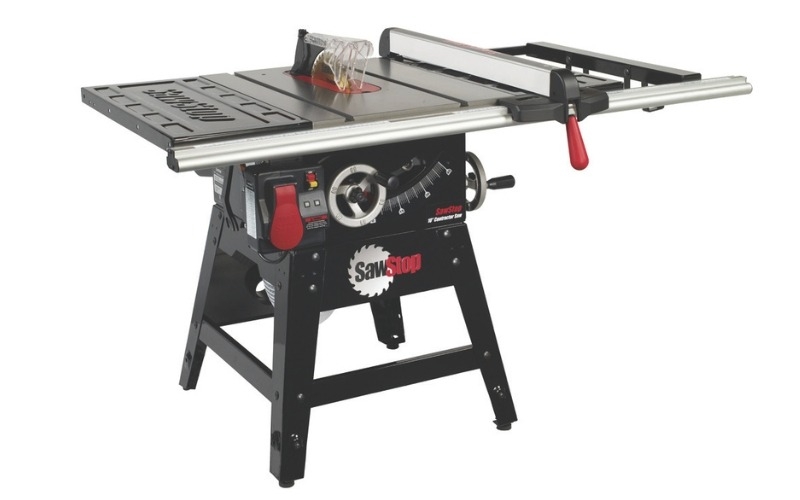
The following list includes components common to most table saws. Becoming familiar with these terms will help you better understand your saw and how it functions.
All-purpose blade: General-use table saw blade designed to handle both ripping and crosscutting reasonably well. It is a good everyday choice when you do not want to change blades for each type of cut.
Anti-kickback Pawls: Spring-loaded toothed arms attached to the splitter or guard assembly that grab the wood if it starts moving backward toward the user. They are designed to help reduce kickback.
Arbor: Shaft that holds the blade in place with a large nut and spins it for cutting.
Arbor nut: Nut that tightens the blade onto the arbor.
Bevel scale: Angle indicator that shows the degree of blade tilt so you can set common bevel angles more quickly.
Bevel tilt handwheel: The control that tilts the blade for angled cuts, usually up to 45°.
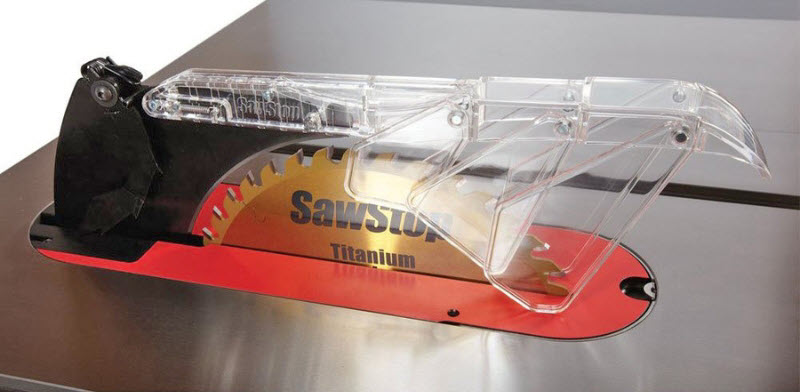
Blade guard: Clear plastic safety cover that sits over the blade to reduce accidental contact and flying chips and debris.
Blade height adjustment wheel: Handwheel or crank that raises and lowers the blade.
Blade wrench: Loosens and tightens the arbor nut when changing blades.
Combination blade: Multipurpose blade designed to make both rip cuts and crosscuts while producing a reasonably smooth finish.
Crosscut blade: Blade designed to cut across the wood grain; usually has more teeth than other blade options to produce the smoothest possible cut.
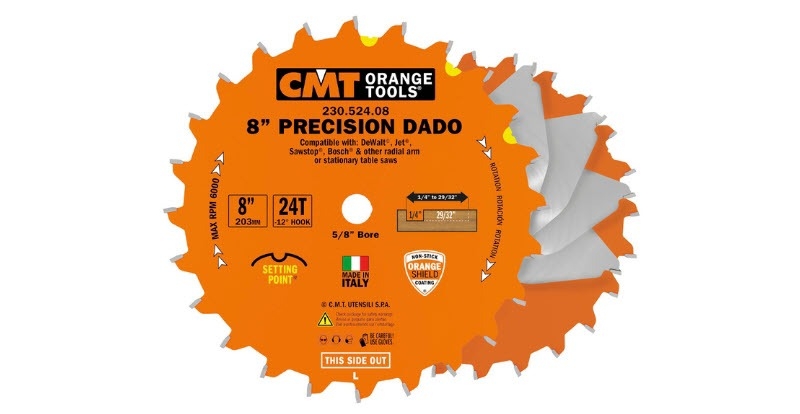
Dado blade: Specialty stackable blade set used to cut grooves, dadoes, rabbets and other joinery of different widths.
Drive system: Mechanism that transfers power from the motor to the blade; depending on the saw, this may be a direct connection to the motor shaft or by way of a belt-drive.
Dust port: Connection point for a shop vacuum or dust collector to keep sawdust under control.
Extension wings: Add-on or built-in tabletop sections that increase the work surface for supporting wider boards, panels and sheet goods.
Fence rails: Front and rear rails that enable the rip fence to slide, lock and remain aligned with the blade.
Laminate blade: Fine-tooth blade designed for cutting plastic laminate, melamine and other sheet goods prone to chipping.
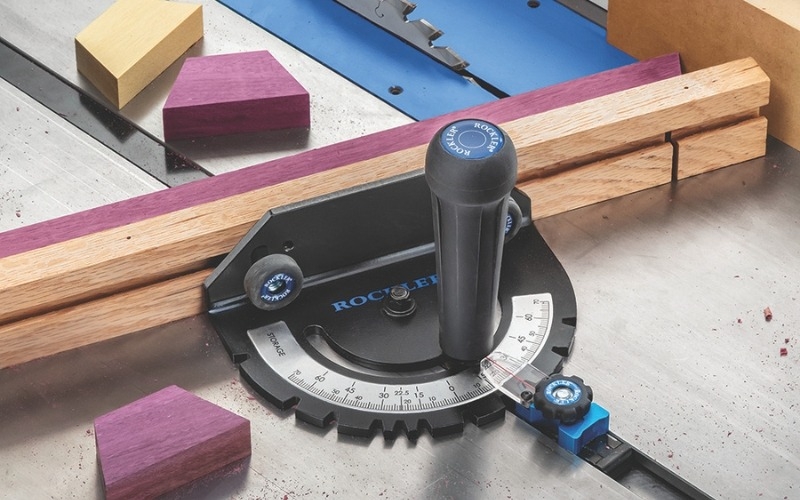
Miter gauge: Removable guide consisting of a bar that slides in the miter slot with an adjustable, protractor-style head used for making crosscuts and miter cuts.
Miter slots: Grooves in the tabletop that accept a miter gauge, sled, or other table saw accessories.
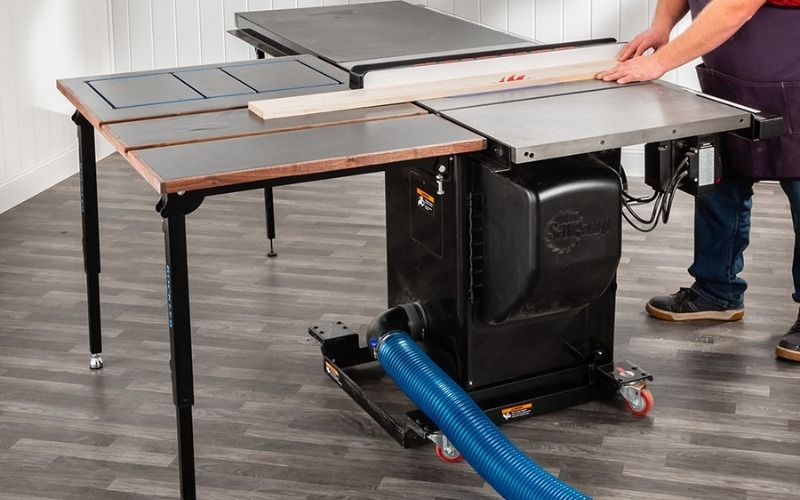
Mobile base: Stand with wheels that makes table saws of all kinds easier to move around a workspace.
Motor: Power source that spins the blade, which may either be a universal motor for jobsite and benchtop saws or an induction motor for contractor and cabinet saws.
Outfeed table support: Extended surface behind the saw that catches the board after it passes the blade, making longer or larger workpieces safer and easier to control.
Plywood blade: Blade with a high tooth count designed to make cleaner cuts in plywood and other veneered sheet goods to help reduce splintering and tearout on thin face veneers.
Push block: Hand-held safety aid that gives you more control and downward pressure when feeding stock through the cut.
Push stick: Simple safety accessory with a bird's mouth end used to push narrow boards past the blade when making rip cuts to protect your hand.
Rip capacity: Maximum distance the rip fence can be set and locked away from the blade.
Rip fence: Adjustable guide that extends the depth of the table and runs parallel to the blade, used for ripping boards to width.
Ripping blade: Blade designed with fewer teeth and larger gullets to cut along the wood grain quickly.
Riving knife: Thin metal crescent-shaped fin behind the blade that helps keep the cut from closing up and pinching the blade from behind, which can invite kickback.
Saw blade: Circular cutting blade available in different tooth counts and styles for ripping, crosscutting, general-purpose use and specialty applications.
Splitter: Similar in purpose to a riving knife but usually fixed in place and not always as closely aligned with the blade; helps keep the kerf open after a rip cut.
Stand: Base that supports the saw; some are fixed while others fold or roll for easier storage and transport.
Tabletop: Flat surface that supports your workpiece as you cut.
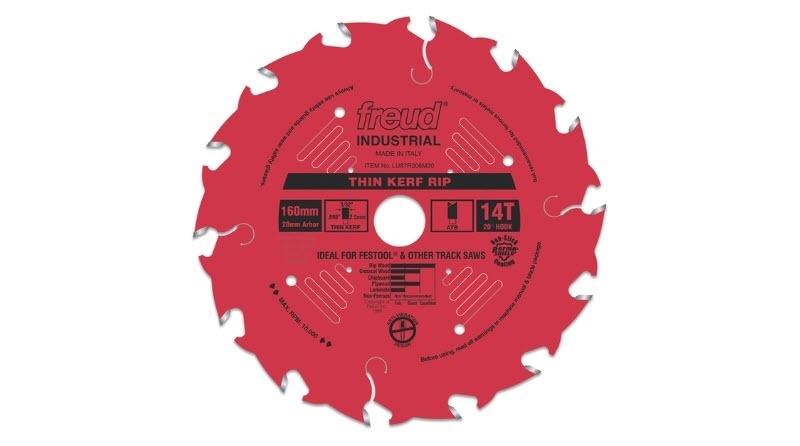
Thin-kerf blade: Blade with a narrower cutting width than a standard-kerf blade to remove less material, which can make cutting easier on lower-powered saws and reduce waste.
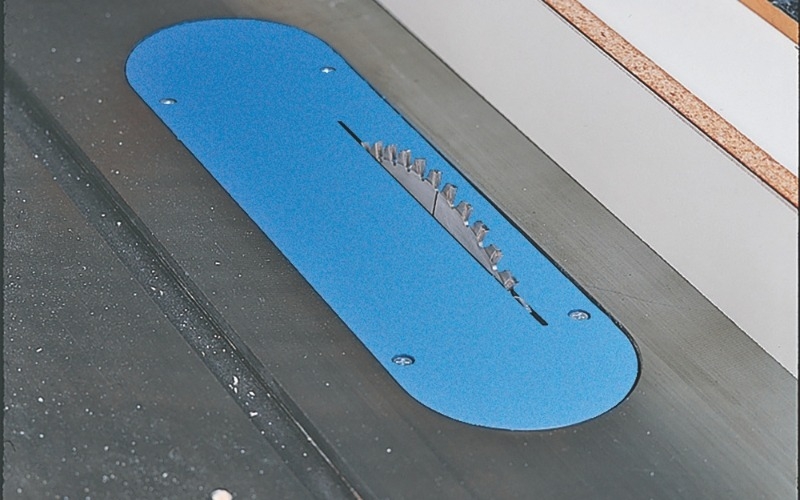
Throat plate: Removable insert around the blade opening in the tabletop that supports workpieces closer to the cut and prevents scraps from falling down inside the saw.
Trunnion: Internal support mechanism that holds the arbor assembly and lets it raise, lower and tilt; sturdy trunnions help the saw cut smoothly and hold their alignment.
Zero-clearance insert: Throat plate with an opening that nearly matches the blade's kerf, which helps reduce tearout and supports small offcuts better than a wide factory opening.
-

-
-
-
Rockler Rock-Steady Folding Table Saw Outfeed KitSpecial Price $179.99 Each Regular Price $219.99 Save $40.00
-


Keep the inspiration coming!
Subscribe to our newsletter for more woodworking tips and tricks


